
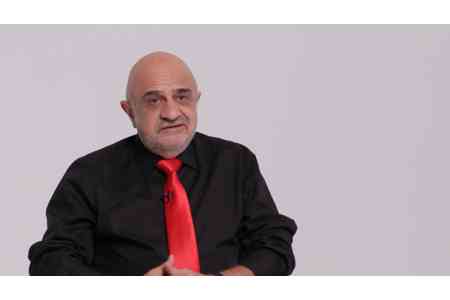
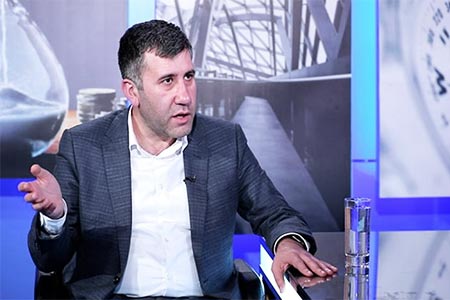
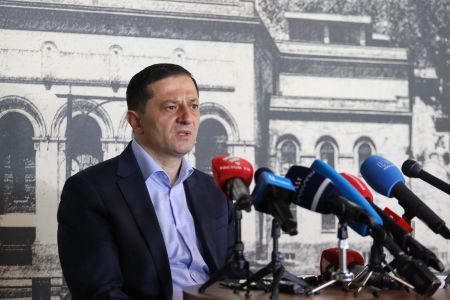
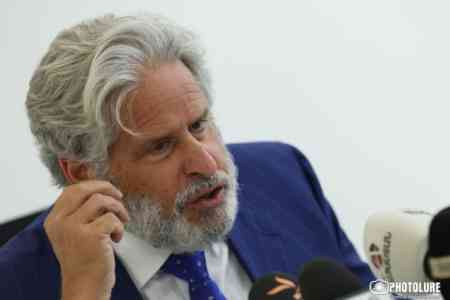
ArmInfo. States have always sought to either subjugate the Church or prevent it from interfering in state affairs, as stated by Ruben Babayan, director and former head of the Hovhannes Tumanyan State Puppet Theater, in an interview with Public Television.
According to him, similar practices have occurred in various countries. He cited France, England, and Italy as examples. "In 1929, Mussolini was even forced to create the Vatican State to prevent the Catholic Church from interfering in Italian affairs," Babayan noted. Addressing the Armenian reality, Babayan mentioned that in Armenia, too, the state has exercised strict control over the Church at various times. "It's enough to recall the Soviet era. Catholicos Khoren I was assassinated, and all subsequent Catholicoses during the Soviet era were effectively under KGB control. Let's also recall the election of Karekin I, when the president directly called for his election as Catholicos, and then the election of Catholicos II, during which archbishops publicly declared pressure from the authorities," he noted.
According to the director, starting in 2018, with the beginning of a new socio-political phase, the state, on the contrary, distanced itself from Church processes. However, after the 2020 war, the Church began actively interfering in politics. He noted that the clergy's statements after the war were understandable, as during that period, "only the lazy did not demand the resignation of the government and new elections." "But subsequent events have shaped my thinking differently," Babayan said. He emphasized that he was not at all interested in issues of celibacy, pointing out that "nature is often stronger than religious prohibitions." However, he added that there were more serious accusations. "Today, no one can deny that the Catholicos is involved in politics. Even defenders of the Church's position say that he is a citizen and has the right to do so," Babayan said.
In this vein, he emphasized that the Church has one mission-to show the way to God. "I've always compared the Church to a hospital. A hospital may have a pharmacy, a coffee shop, a prayer room, a store, a library, but its main purpose is to treat people. If a hospital stops treating and focuses on business, it is not fulfilling its primary function," Babayan clarified.
He also emphasized that he was expressing this stance as an outsider, as he considers himself an agnostic and respects both believers and atheists. "But maybe we should take the responsibility for our own actions. "If, say, you are unwillingly thrust into the political sphere and used as a symbol, maybe you should consider not being a pawn if you disagree with it," he said.
For a long time, as Babayan noted, the Armenian Church has been under the influence of various states- both during the Soviet period and earlier, in the Ottoman, Russian, and Iranian empires. "I think when the Church lost one [master] in Armenia, it began looking for another and found one in the North. Perhaps I'm wrong. This is a serious issue. It's not about celibacy. It's a geopolitical, ideological, civilizational, and civic issue," the director said. He emphasized that regardless of one's status-whether a member of the clergy, a villager, an actor, or anyone else-one may disagree with the government's policies, but one is obligated to defend its status as a state.














 Narek Karapetyan will give up his parliamentary salary in favor of charitable contributions.
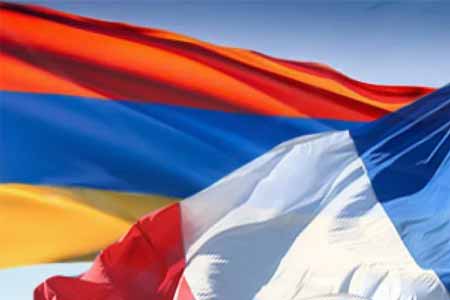 Armenia and France discuss further development of strategic partnership and EU cooperation
  To overcome risks Armenia must reduce domestic escalation - expert
  Zatulin: Pashinyan was eager to get back to Russia because he actually lost the elections
 Human rights activist Ruben Melikyan dismissed from YSU
 Pashinyan removed from INNOPROM guest list
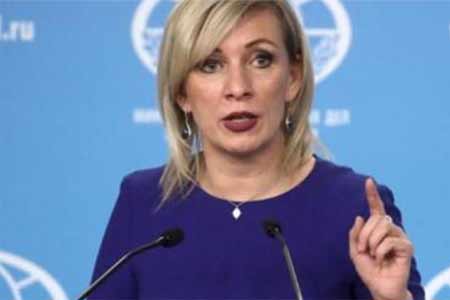 Zakharova: Armenia`s pro-EU pivot poses economic security risks to EAEU member states
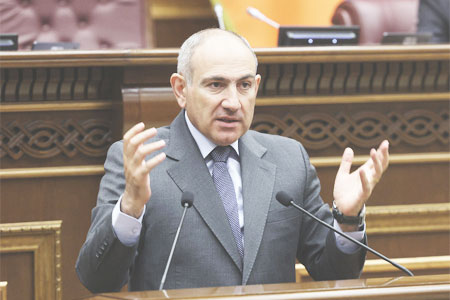 It`s time for South Caucasus countries to think of South Caucasus as single, unified region - RA premier
  Pashinyan: Armenia and Azerbaijan should leave each other alone
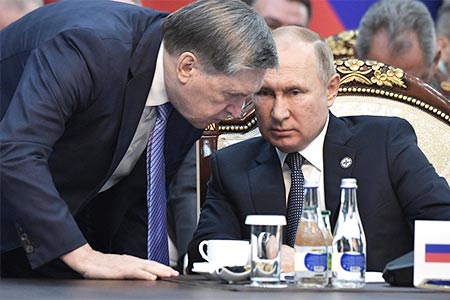 Moscow sees situation with Armenia as attempt to attack Russia-involving integration associations - Russian presidential aid
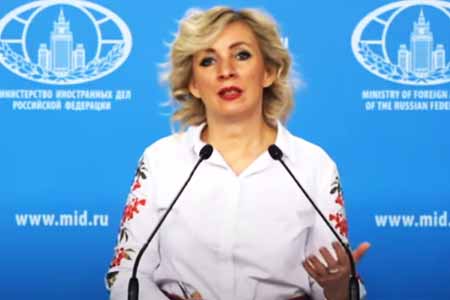 Zakharova: Armenia views relations with Russia as tool for financially securing reorientation toward EU
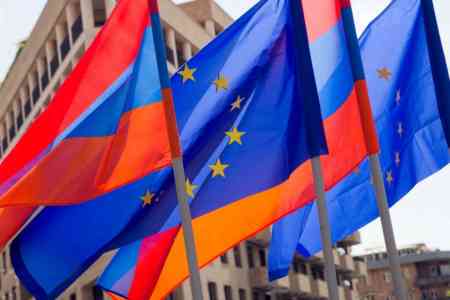 The Armenian Minister of Justice and the EU Ambassador discussed visa liberalization issues for Yerevan.
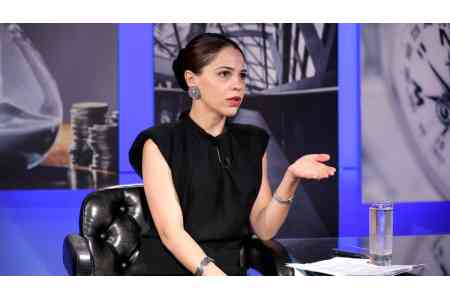 Azerbaijan`s aggressive plans against Armenia became possible in wake of Pashinyan`s decisions on Artsakh - expert
 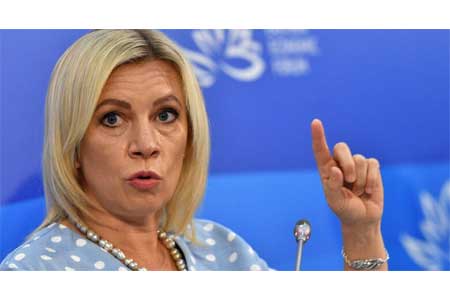 Zakharova: Russia sent a note of protest to Armenia over the act of vandalism at the "Mother Armenia" memorial in Gyumri