

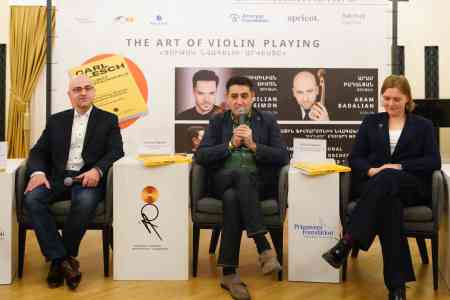
ArmInfo. Following the release of "The Art of Violin Playing" by the Austro-German violinist and music educator Carl Flesch, his violin scales will also be available to the Armenian professional music community. This was announced by Eduard Topchyan, Chief Conductor and Artistic Director of the Armenian National Philharmonic Orchestra, during a press conference dedicated to the Armenian-language publication of Carl Flesch's manual "The Art of Violin Playing."
Noting the historical significance of the Austro-German teacher in music, Topchyan shared his memories of the period when he taught violin using Carl Flesch's scales. "I am very familiar with his scales. Many years ago, I played them myself and felt their benefit. I had several talented students, including my wife, Anush Nikoghosyan. All of these musicians became outstanding violinists. Every day during class, they studied and played Carl Flesch's scales in detail. "For us, it was like the Bible-lessons always began with it. The results were simply phenomenal," the conductor shared.
Regarding the Armenian translation of "The Art of Violin Playing," Topchyan noted that this manual has received high praise from experts, including German violinist Anne-Sophie Mutter, who wrote the foreword.
The Armenian translation was published under a licensing agreement with the Berlin publishing house Ries and Erler. The translator from German to Armenian and editor-in-chief is violinist and professor at the Detmold Conservatory, Aram Badalyan. The editors of the German edition were Maximilian Simon and Nadine Contini.
This groundbreaking project was implemented by the Primavera Foundation of Armenia in collaboration with the Armenian National Philharmonic Orchestra, with financial support from the Amaryan Charitable Foundation. Primavera Foundation co-founder Elena Yakovleva noted that the book has been published in a limited print run of 300 copies. However, under a license with a German publisher, a total of 200 more textbooks will be published, if needed.
"This book is not available for purchase anywhere. It can only be obtained free of charge by professional teachers and musicians by contacting us.
In this eight-month project, something could have gone wrong - we might not have had a translator fluent in three languages and a professorial status in Germany; we might not have been able to reach an agreement with a publisher willing to complete the translation on time and as required; we might not have found the funding to complete the project; we might not have been able to confirm the academic suitability of this publication at the Komitas Conservatory. This is a confidential process involving more than 20 specialists," she said.
Aram Badalyan, in turn, noted that the most difficult choice when working on the translation was between conveying the beauty of the German language and clarity of presentation. In the Armenian version, he struck a balance between ensuring the text was elegant and yet practical and accessible to modern readers. "When I received Elena Yakovleva's offer to translate this book, I was very excited by the idea and immediately agreed. Of course, I didn't realize the full scope of the work at the time-in the end, I spent sleepless months translating it. It's probably the most challenging work I've ever undertaken-but at the same time, it brings tremendous pleasure," he noted. The violinist also explained that after the 2020 war, he and his colleagues decided to support their historical homeland in every way possible, providing assistance to the best of their professional abilities. Consequently, Yakovleva's offer was more than appropriate, as it perfectly aligned with his vision and mission.
Maximilian Simon emphasized that his connection with Armenia is particularly important to him. "As the head of the violin department at the Primavera Foundation, I traveled extensively to music schools in Armenia to conduct master classes, and I realized that there was a lack of information everywhere-a single work that specialists could rely on. In this sense, the Armenian translation of Carl Flesch's book was the best solution: it is one of the most authoritative teaching methods of all time," he noted.
Lena Gulkhasyan, Public Relations Officer for the Amaryan Charitable Foundation, explained that when selecting projects, the Foundation is guided by the need for them to have a long-term, lasting impact on the development of Armenian culture, education, youth, and sports. "And this program was consistent with our principles. We are proud to see the results and are confident that the book will serve its purpose for decades to come," she said.
During the press conference, it was also noted that, with the support of the Amaryan Foundation,
Maximilian Simon will conduct master classes for young Armenian violinists. The publication of the "Art of Violin Playing" manual will be celebrated with a gala concert on December 24 at 7:00 PM in the Aram Khachaturian Concert Hall. The soloists will be the editor of the new German edition of the book and the translator of the Armenian edition, violinists Maximilian Simon and Aram Badalyan. The program will feature violin concertos by Eduard Korngold and Mstislav Bruch, as well as the overture to Glinka's opera "Ruslan and Lyudmila," performed by the Armenian National Philharmonic Orchestra under the direction of Eduard Topchyan.















 Politician: Statement by Armenia`s third president may deprive opposition of only political basis for ousting Pashinyan
 Political scientist: Real recount will deprive Pashinyan of any constitutional majority
 Elections in Armenia were accompanied by unprecedented pressure on opposition, RF MFA spokesperson claims
  Expert: Even OSCE observers recorded numerous violations during elections in Armenia
 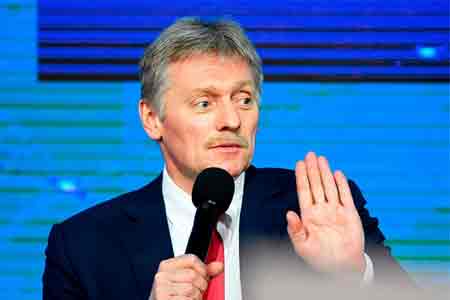 Moscow to await official results of Armenian elections - Peskov
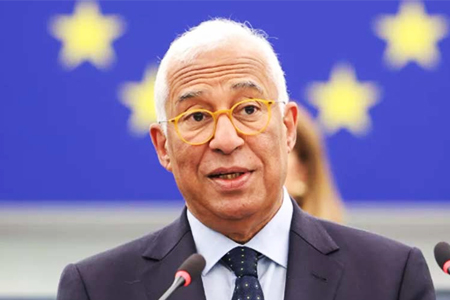 Antonio Costa: EU to deepen its partnership with Armenia, expanding cooperation in energy, trade, and digitalization
 Israeli MFA congratulates Pashinyan
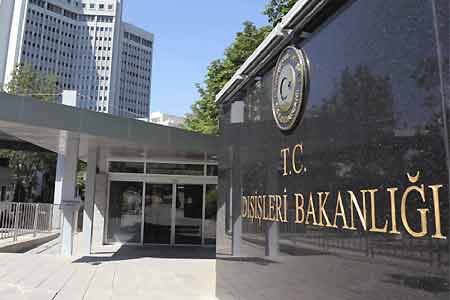 Turkish MFA comments on results of Armenian elections
 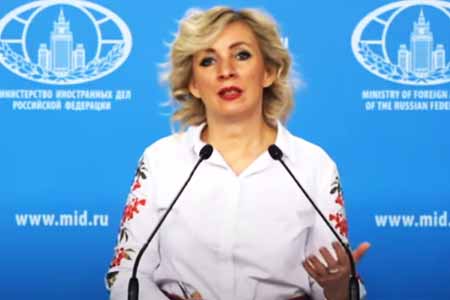 Zakharova: International observers cannot ignore `flagrant violations` in Armenian elections
 Russian Senator: Opposition complaints regarding election violations by ruling party remain unanswered
 RA premier receiving congratulations on his victory in parliamentary elections
 Head of IPA CIS Council Secretariat: Extremely difficult atmosphere during parliamentary elections campaign in Armenia accompanied by mass arrests
 Pashinyan`s party leads with 51.13% based on vote counts from 533 polling stations