
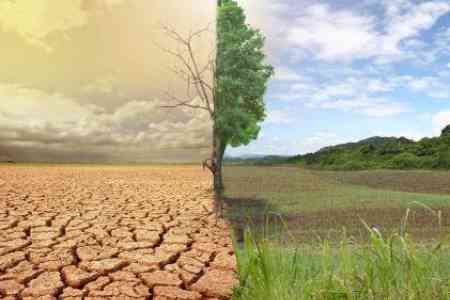
ArmInfo. Armenian authorities are planning to regulate issues related to the consequences of climate change. At its October 15 session, the National Assembly Standing Committee on Territorial Administration, Local Self-Government, Agriculture, and Environmental Protection issued a positive opinion on the draft law "On Climate" submitted by the RA government, along with a package of related documents.
RA Deputy Minister of Environment Aram Meymaryan presenting the package and emphasized that the draft law regulates the development, implementation, and coordination of climate change mitigation and adaptation policies in the Republic of Armenia. It also regulates relations between the RA government, regional governors, municipalities, all registered units, individuals, and foreign legal entities. The purpose of this document is to provide a legal framework for planning and implementing measures aimed at reducing greenhouse gas emissions in line with the country's international obligations, as well as planning and implementing climate change adaptation measures, including protecting the population, economy, and infrastructure from the impact of climate change and enhancing their resilience.
The document also establishes a legal framework for the formation of an institutional system for the development, implementation, evaluation of results, coordination of these processes, and ensuring accountability, as well as defining the powers of state and local government bodies. It is also planned to support the development of sustainable financial flows for climate policy implementation through the continued use of existing and innovative mechanisms.
The package includes measures to provide a basis for the creation and ongoing development of an accountability and certification system in accordance with the expanded transparency framework stipulated by the Paris Agreement adopted under the United Nations Framework Convention on Climate Change.
Through the application of legislation, the country's authorities intend to promote the development of the of the environment, populations, regions, communities, economic sectors, and infrastructure to adapt to the consequences of climate change and enhance resilience. The document presents the basic concepts such as "climate", "climate change", "greenhouse gases", "source of greenhouse gas emissions", etc.

























 Analyst: The primary issue with Armenia`s new Parliament Speaker`s speech lies is its one-sided interpretation of the causes of the political crisis
 Expert: Gagik Tsarukyan embodies post-Soviet model of big business-state relations; this model is used in many other post-Soviet countries
 Expert: Azerbaijan promoting aggressive plans against Armenia at state level
 Iranologist: Baku`s propaganda of might masks the country`s inability to provide water to its own population
 NA Vice Speaker candidate believes his wife`s salary as director of HayPost is the lowest in the company`s history
 RF Permanent Representative: There is no CSTO-Armenia conflict
 Moscow: NATO seeking to "Pull" Armenia away from CSTO Allies
  Political analyst: Russia intends to determine which "Camp" Armenia will choose through a referendum
 Narek Karapetyan will give up his parliamentary salary in favor of charitable contributions.
 Armenia and France discuss further development of strategic partnership and EU cooperation
  To overcome risks Armenia must reduce domestic escalation - expert
 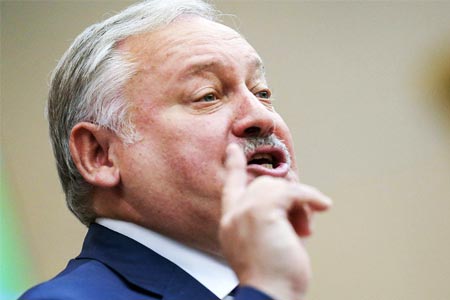 Zatulin: Pashinyan was eager to get back to Russia because he actually lost the elections
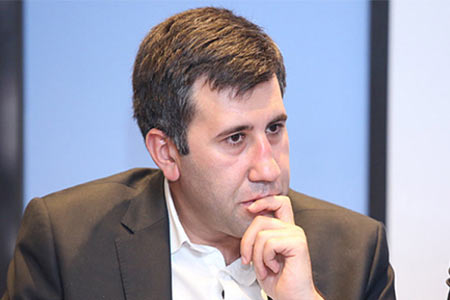 Human rights activist Ruben Melikyan dismissed from YSU
 Zakharova: Armenia`s pro-EU pivot poses economic security risks to EAEU member states
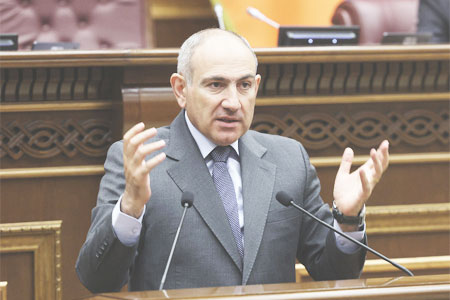 It`s time for South Caucasus countries to think of South Caucasus as single, unified region - RA premier
  Pashinyan: Armenia and Azerbaijan should leave each other alone
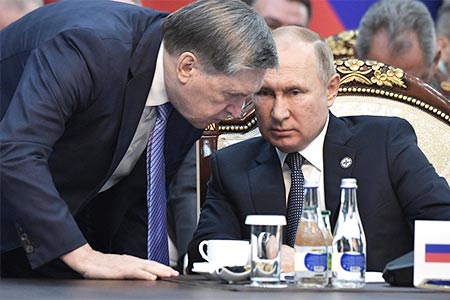 Moscow sees situation with Armenia as attempt to attack Russia-involving integration associations - Russian presidential aid