


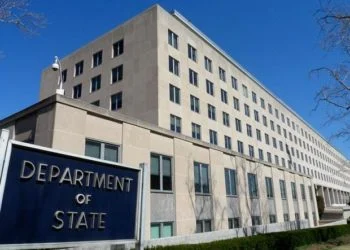
ArmInfo. There were some significant positive changes regarding the government's commitment to human rights in Armenia. The government increased the legal age for marriage to 18, eliminating exceptions for certain instances of child marriage. The government and the ombudsperson promptly responded to the single antisemitic incident in the country, providing sharp and public condemnation of antisemitism in any form, reads the 2024 Country Reports on Human Rights Practices: Armenia by the U.S. Department of State.
Significant human rights issues included credible reports of: torture or cruel, inhuman, or degrading treatment or punishment; arbitrary arrest and detention; and significant presence of any of the worst forms of child labor.
The government took limited credible steps to identify and punish former and sitting government officials who committed human rights abuses. There was no reported progress on government investigations of alleged abuses committed by armed forces or individuals during hostilities in 2020.
The legal minimum age for marriage was 18, and the government generally enforced the law. Legal amendments adopted on September 11 removed the exceptions allowing for marriage at an earlier age. While early marriage of girls was reportedly widespread within Yezidi communities, there were anecdotal reports that the problem existed in ethnic Armenian families as well. Reports indicated that within the Yezidi community some girls left school either as a consequence of early marriage or to avoid abduction and forced marriage. The government did not record the number of unregistered early marriages. According to a February 2023 opinion by the Advisory Committee on the Framework Convention for the Protection of National Minorities, civil society organizations and Yezidi organizations asserted that while early marriage had little basis in Yezidi tradition, authorities rarely acted to prevent it due to fear of unduly restricting what they perceived to be a Yezidi tradition, leading to underreporting to police. Representatives of the Yezidi community, however, reported an incremental increase in local government officials' disapproval of the practice.
The constitution and law prohibited such practices, but there were credible reports government officials employed them. The local NGO community expressed concern regarding allegations that members of the security forces tortured or otherwise abused individuals in their custody with impunity. According to human rights lawyers, while the criminal code defined and criminalized torture, it did not criminalize other cruel, inhuman, or degrading treatment. Officials often investigated allegations of torture under charges of abuse of power, leading to lighter punishments. On July 25, the Court of Cassation ruled investigative bodies had not effectively investigated allegations of torture and noted lower courts had failed to properly take into consideration the lack of investigation when deciding judicial cases.
Human rights organizations and activists asserted military police subjected military personnel to mistreatment, abuse, and possibly torture. They noted when the army investigated allegations of torture and abuse, officials used articles of the criminal code specific to regulating military service rather than articles specific to torture. According to human rights activists, by using this special section of the criminal code, military officials reduced legal safeguards and allowed for dismissal of cases based on the expiration of the statute of limitations.
There were no reports the government or its agents committed arbitrary or unlawful killings during the year.
Human rights nongovernmental organizations (NGOs) expressed concerns regarding multiple reports of noncombat deaths in the army and allegations law enforcement bodies failed to conduct credible investigations into those deaths. According to civil society organizations and victims' families, the practice of qualifying many noncombat deaths as suicides at the onset of investigations made it less likely abuses would be uncovered and investigated. According to human rights lawyers, the biggest obstacle to the investigation of military deaths was the destruction or nonpreservation of key evidence, both by the military command (in cases of internal investigations) and by the specific investigation body working on a case. According to human rights NGOs, the government's lack of transparency in reporting on military deaths, whether classified as combat or noncombat, led to public distrust of official information in this sphere.
Human rights lawyers asserted there was no progress on investigations into noncombat deaths in the military despite multiple rulings by the European Court of Human Rights (ECHR) ordering the government to investigate.
The government reported the investigations into the deaths of two persons who allegedly jumped to their deaths from windows while in police custody in April and July 2023 continued during the year. No officers were charged at year's end.
Sporadic allegations of incidents of limited cross-border firing in the decades-long conflict between Armenia and Azerbaijan impacted civilians during the year. The Armenian government accused Azerbaijani Armed Forces of repeated attacks on civilian infrastructure. On November 11, Freedom House published a report alleging the Azerbaijani government acted upon a comprehensive, methodically implemented strategy to empty Nagorno-Karabakh of its ethnic Armenian population between 2020 and 2023, subjecting the population in Nagorno-Karabakh to attacks, intimidation, deprivation of basic rights and adequate living conditions, and forced displacement. The report recommended parties "continue pursuing international legal avenues to seek accountability measures and remedies:includ[ing] ongoing efforts at the International Court of Justice (ICJ) and the European Court of Human Rights."
Complaints submitted by the governments of Armenia and Azerbaijan to the ECHR alleging the other side committed atrocities during 2016-20 fighting awaited the court's ruling, as did the Armenian government's claims regarding September 2022 fighting.
Following the mass exodus from Nagorno-Karabakh of virtually all of the region's ethnic Armenians in late September 2023, the ICJ instructed Azerbaijan to ensure the safe, unimpeded, and expeditious return of those who wished to return to Nagorno-Karabakh and the protection of persons in Nagorno-Karabakh. The Armenian government's investigation into crimes, including killings allegedly committed by Azerbaijan against Nagorno- Karabakh residents, originally announced following the flight of more than 100,000 ethnic Armenian Nagorno-Karabakh residents into Armenia in 2023, continued at year's end. There were no updates on the six criminal cases launched by Armenian authorities in 2020 to investigate actions of perpetrators speaking Armenian during the fall 2020 intensive fighting on charges of "serious violations of international humanitarian law during armed conflicts." Of the six cases, four involved alleged murder, torture, and inhuman treatment; one involved alleged murder and torture; and one involved alleged murder. The government combined all six cases into one criminal proceeding in 2021. The investigation remained underway at year's end.
Journalists at times were subjected to violence, harassment, or intimidation by authorities or those acting on behalf of authorities. The NGO Committee to Protect Freedom of Expression reported an increase in the number of cases of physical violence against journalists during the second quarter of the year against a backdrop of political protests in the country.
Journalists, particularly those from independent media outlets, reported facing significant pressure and threats both online and in person for their coverage of high-level government corruption and for posing questions aimed at holding government officials accountable. In its May 3 World Press Freedom Index, Reporters Without Borders noted antimedia rhetoric from political elites, who accused journalists of "corruption" and of serving their adversaries, fostered a climate of intolerance that impeded the work of reporters in the country.
On June 12, during protests calling for the prime minister's resignation, members of the press corps alleged police directed stun grenades in their direction and broke their equipment, and that some sustained physical injuries after being pushed during police clashes with protesters. Multiple media associations condemned the actions of police, citing videos and photographs they claimed showed officers targeting reporters and camera operators covering the protest.















 Political Scientist: As long as the opposition remains silent, Pashinyan can use Plan B and secure a constitutional majority
 US-Iranian memorandum more beneficial for Iran from political and economic perspective - expert
  Political analyst: While Pashinyan pledges peace with Azerbaijan, Baku continues promoting the "Western Azerbaijan" project
 Political analyst: In light of new realities, Yerevan may propose advancing peace process with Baku without constitutional referendum
 Present-day geopolitical competition shifts from territorial control to infrastructure flows
 Moscow sees situation with Armenia as attempt to attack Russia-involving integration associations - Russian presidential aid
 Zakharova: Armenia views relations with Russia as tool for financially securing reorientation toward EU
 The Armenian Minister of Justice and the EU Ambassador discussed visa liberalization issues for Yerevan.
 Azerbaijan`s aggressive plans against Armenia became possible in wake of Pashinyan`s decisions on Artsakh - expert
  Zakharova: Russia sent a note of protest to Armenia over the act of vandalism at the "Mother Armenia" memorial in Gyumri
 Samvel Karapetyan proposes creating a post-election opposition coalition
 Artsakh`s Cultural Heritage Ombudsman called on Moscow to respond to destruction of WWII monuments by Azerbaijan in occupied NKR
 Prosecutor General`s Office petitions Central Electoral Commission for criminal prosecution of Robert Kocharyan
 Dutch Prime Minister expresses his support for Armenia`s democratic reform and economic diversification agenda
 Heritage: It`s time for Armenia`s opposition to present people with legitimate alternative to power
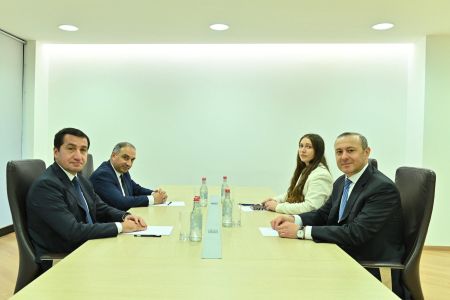 RA Security Council Sec, Assistant to President of Azerbaijan hold negotiations in Dilijan
 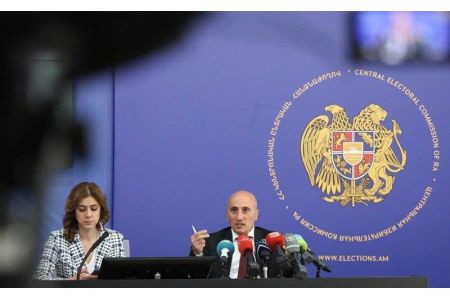 CEC Neutralizes PAP: Three Political Forces to Enter Armenian Parliament Following Election Vote
 Elections in Armenia were accompanied by unprecedented pressure on opposition, RF MFA spokesperson claims
  Expert: Even OSCE observers recorded numerous violations during elections in Armenia
  Moscow to await official results of Armenian elections - Peskov