


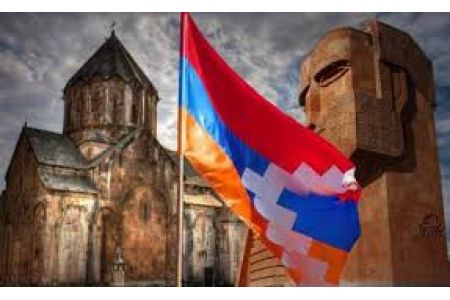
ArmInfo. Any delay or formal response by the international community to the cultural genocide in occupied Artsakh encourages its continuation. This statement was issued by the Artsakh Cultural Heritage Ombudsman's Office, the NKR Agency for Culture and Tourism Development, the Kachar Scientific Center, and the Azgayin Historical and Cultural NGO, amid the international community's silence regarding the crimes committed by Azerbaijan in destroying or appropriating the heritage of the Nagorno-Karabakh Republic (NKR).
The organizations noted that the actions of the Azerbaijani authorities have long since gone beyond the damage caused by isolated acts of vandalism or military action, and have evolved into a coherent strategy whose key goal is the complete eradication of the presence of Armenian civilization in Artsakh.
"This policy includes the desecration and demolition of churches and monasteries, the destruction of khachkars and cemeteries, the deliberate destruction of historical monuments, Armenian settlements and residential areas, and the falsification of cultural heritage. Notably, the destruction of cultural treasures is accompanied by the systematic distortion of history, the falsification of facts, and propaganda aimed at misleading the international community. This is not only a cultural but also an ideological war, the goal of which is to erase traces of Armenian identity and rewrite the history of the region," the statement noted.
In this regard, the organizations stated that the policy being pursued in Artsakh must be classified as one of the largest cultural genocides of the 21st century, aimed at destroying not only material heritage but also the historical memory and identity of an entire people. "These actions by Azerbaijan grossly violate the fundamental norms of international law, including international conventions on the protection of cultural heritage, as well as the principles of protecting universal values. Silence and inaction in such circumstances become a form of complicity. In this regard, we urgently demand immediate and independent fact-finding missions from international organizations in Artsakh, a clear and targeted response from UNESCO and other specialized bodies, and the application of political and legal mechanisms by states and international bodies against Azerbaijan to prevent cultural genocide and demand accountability for it," the organizations emphasized. They also demanded that the Armenian authorities consistently publicize the cultural genocide being perpetrated by Azerbaijan at the state level in the temporarily occupied Artsakh at all international forums, ensure proper representation of the issue in international organizations and political agendas, and take effective and coordinated steps to preserve and protect Artsakh's civilizational heritage and ensure its protection through international legal mechanisms. "We also emphasize that the destruction of cultural heritage is not only a denial of the past but also a crime against the future. It aims to deprive generations of their historical roots and undermine the potential for mutual understanding and peaceful coexistence among peoples. In this context, any delay or formal response by the international community encourages the continuation of such crimes. Cultural genocide cannot be viewed as a minor or local issue. It is a global threat to the preservation of civilization's heritage. Artsakh's cultural heritage is a universal value, and its destruction strikes a blow to all humanity. We call for unity to prevent this catastrophic process and ensure the restoration of historical justice," the Artsakh NGOs said in a statement.
In this regard, the Artsakh Cultural Heritage Ombudsman also reported on the destruction of a memorial to the victims of the Great Patriotic War and the Artsakh wars in the village of Khnushinak, Martuni district, Nagorno-Karabakh. He noted that this was not an isolated act of vandalism, but an integral part of a consistent strategy aimed at completely erasing the historical memory of this region. "The destruction of monuments here functions as a mechanism for constructing a 'silenced history,' in which witnesses to the past are physically eliminated to make it possible to impose a new, falsified history. The memorial in Khnushinak was more than just a stone structure. It was a symbolic space where the memory of people who lived, fought, and died for their homeland was materialized. This monument documented the Armenian presence, historical continuity, and the idea of sacrifice. Consequently, its destruction is directed not only against the past but also against the future, depriving generations of the pillars of their identity," the Ombudsman explained. He also emphasized the concern that such actions are often accompanied by silence from international organizations. "This silence, in essence, translates into indirect sympathy or, at least, indifference, which encourages the continuation of such policies. When the destruction of cultural heritage fails to receive an adequate political, legal, and moral response, it becomes a widespread practice," the Artsakh Cultural Heritage Ombudsman noted.
In this regard, he recalled the destruction of the Church of St. John the Baptist (known as "Kanach Zham") in Shushi, temporarily occupied by Azerbaijan, between December 28, 2023, and April 4, 2024, noting that this action constitutes a gross violation of the International Court of Justice's December 2021 ruling. "We call for unity to prevent this catastrophic process and ensure the restoration of historical justice," the Artsakh Cultural Heritage Ombudsman concluded. It should be noted that Azerbaijan is pursuing a deliberate policy of not only destroying Artsakh's cultural heritage, but also altering the architectural appearance of the occupied territories, thereby attempting to destroy both the cultural memory of the Artsakh people and their desire to return to their lands.






















 Lawyer: according to preliminary results, Pashinyan`s party lacks 2/3 majority necessary to amend Armenia`s Constitution
 Politician: With high voter turnout, current government to no chance
 Antonio Costa: EU to deepen its partnership with Armenia, expanding cooperation in energy, trade, and digitalization
 Israeli MFA congratulates Pashinyan
 Turkish MFA comments on results of Armenian elections
  Zakharova: International observers cannot ignore `flagrant violations` in Armenian elections
 Strong Armenia to issue statement after vote count completed - Narek Karapetyan
 Russian Senator: Opposition complaints regarding election violations by ruling party remain unanswered
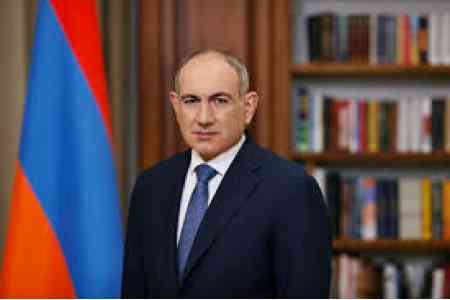 RA premier receiving congratulations on his victory in parliamentary elections
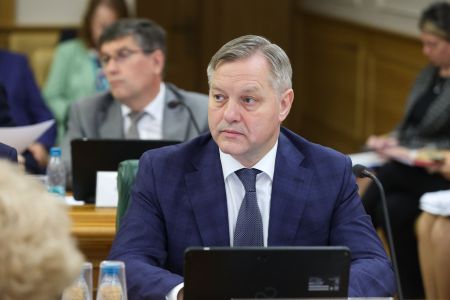 Head of IPA CIS Council Secretariat: Extremely difficult atmosphere during parliamentary elections campaign in Armenia accompanied by mass arrests
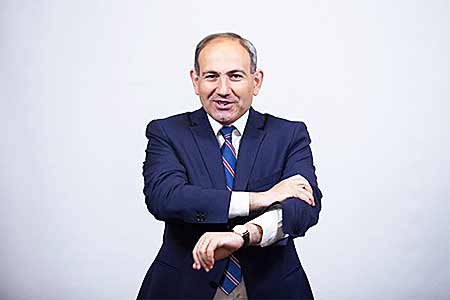 Pashinyan`s party leads with 51.13% based on vote counts from 533 polling stations
 Voting in parliamentary elections in Armenia ends
  Strong Armenia: Administrative Court not providing judicial decisions to citizens wishing to vote in parliamentary elections