

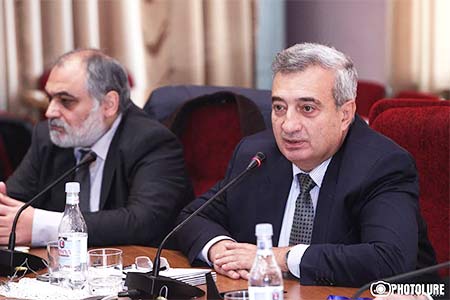
ArmInfo. The Armenian Ministry of Foreign Affairs' (MFA) cautious response to Azerbaijan's false narratives does not serve the national interests of the Republic of Armenia. Ashot Melkonyan, a historian at the Institute of History of the National Academy of Sciences of Armenia, made this statement in an interview with an ArmInfo correspondent in response to a request to assess the Armenian Foreign Ministry's statement regarding Azerbaijan's accusations against the Armenian people concerning the alleged "1918 genocide against Azerbaijanis."
Days earlier, Azerbaijan's Human Rights Commissioner Sabina Aliyeva called on international organizations and UN member states to take a principled stance on the issue of "ethnic cleansing and crimes against Azerbaijanis by Armenians, and to recognize the events of 1918 as genocide."
According to Melkonyan, in this situation, it would have been more appropriate for the Armenian Foreign Ministry to specify in its statement who exactly committed the genocide and against whom. "For example, the events of February 6, 1905, in Baku, better known as the Armenian-Tatar massacre. It's worth recalling the attack by radical Muslims on the Armenian quarter of Armenikend in Baku, which marked the beginning of the pogroms of Armenians, which then continued throughout the Transcaucasus - in Tiflis, Artsakh, and the Yerevan and Elizavetpol provinces. These events continued into 1918, particularly on September 15, when the Turkish army invaded Baku and carried out a massacre of Armenians under the leadership of Nuri Pasha, the brother of Enver Pasha (one of the main organizers of the Armenian Genocide - ed.)," the historian recalled.
At the same time, according to him, the Armenian Foreign Ministry should have reminded Azerbaijan of the massacre organized on March 22-23, 1920, by the troops of General Khosrov bey Sultanov in the Armenian quarter of Shushi, as well as the massacre in Sumgait in February 1988, in Kirovabad in November 1988, and the massacre of Armenians in Baku in January 1990. "And it would be right if they responded to the accusations of a fabricated 'genocide' in Khojaly in February 1992, which was organized by the Azerbaijani authorities themselves as a result of disagreements between them and the National Front, but shifted all the blame onto the Armenians. This is the reality. We must not adhere to the principle of concealing genocide committed by our neighbors. Nor can we equate our cases with theirs, as they are completely different. The claim that Armenian armed forces allegedly organized a massacre of Azerbaijanis on March 31, 1918, is a completely fabricated story," Melkonyan added.
He noted that numerous materials have been published on this issue and expressed his conviction that Azerbaijan's state policy in this regard pursues far-reaching goals. "Thus, the aggression committed in Artsakh in 2020-2023 is seamlessly projected onto Armenia. Meanwhile, actual genocide was committed against Armenians, and the most recent genocidal act took place in Artsakh in 2023, as the people there were not only displaced from their own cradles but also deprived of their homeland. This fully complies with the definition of genocide enshrined in the Convention on the Prevention and Punishment of the Crime of Genocide of December 9, 1948, based on Raphael Lemkin's formula (defines genocide as a crime aimed at the destruction of national, ethnic, racial, or religious groups - ed.). The Armenian Foreign Ministry's response in this regard is excessively cautious and does not serve our interests," the historian emphasized.
According to him, the Armenian Foreign Ministry should have fully disclosed the reality. "However, instead of publicizing the policy of genocide committed against the people of Artsakh and the destruction of Armenian cultural heritage, we are talking about mirror concessions. By refusing to recognize the actual genocide, we are attempting to respond to fabricated accusations and advance a peace agenda," Melkonyan concluded.
Recall, in response to accusations from Azerbaijani Human Rights Commissioner Sabina Aliyeva regarding the "events of 1918," Armenian Foreign Ministry spokesperson Ani Badalyan merely noted with regret that "Azerbaijan continues to use false narratives." According to her, "peace established between Armenia and Azerbaijan will not only contribute to the establishment of stable, peaceful coexistence and good- neighborly relations between the two countries and societies, but will also put an end to contrived narratives and eliminate the incitement of hatred." She then recalled the agreements reached between the leaders of Armenia and Azerbaijan in Washington on August 8, 2025, in particular, point 5, according to which "the parties are discussing the possibility of closing the page of hostility and beginning good- neighborly relations after a conflict that caused human suffering to both sides."













 Political analyst: While Pashinyan pledges peace with Azerbaijan, Baku continues promoting the "Western Azerbaijan" project
 Political analyst: In light of new realities, Yerevan may propose advancing peace process with Baku without constitutional referendum
 Present-day geopolitical competition shifts from territorial control to infrastructure flows
 Prosecutor General`s Office petitions Central Electoral Commission for criminal prosecution of Robert Kocharyan
 Dutch Prime Minister expresses his support for Armenia`s democratic reform and economic diversification agenda
 Heritage: It`s time for Armenia`s opposition to present people with legitimate alternative to power
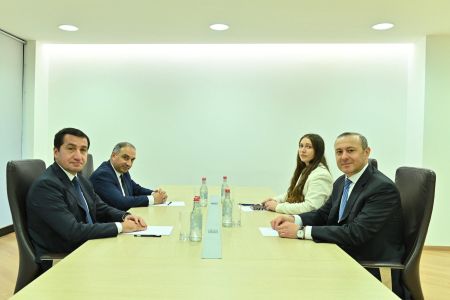 RA Security Council Sec, Assistant to President of Azerbaijan hold negotiations in Dilijan
 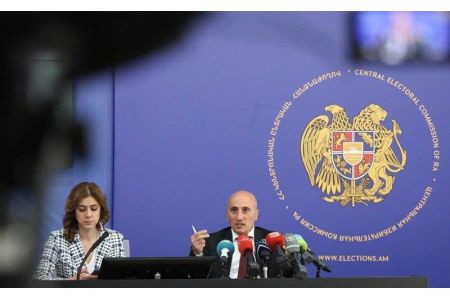 CEC Neutralizes PAP: Three Political Forces to Enter Armenian Parliament Following Election Vote
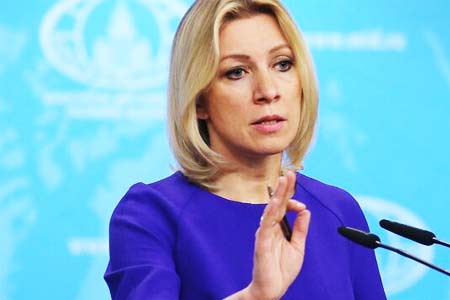 Elections in Armenia were accompanied by unprecedented pressure on opposition, RF MFA spokesperson claims
 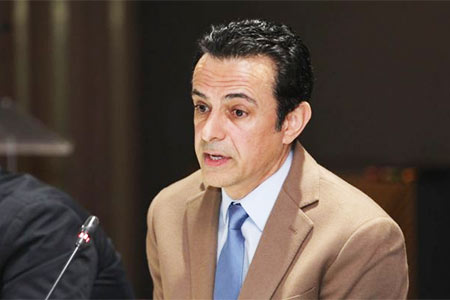 Expert: Even OSCE observers recorded numerous violations during elections in Armenia
 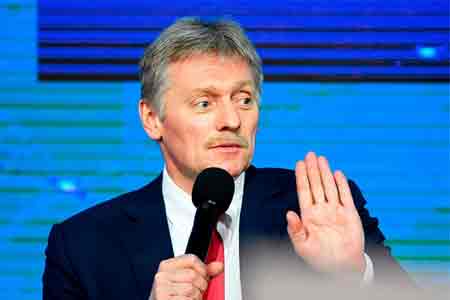 Moscow to await official results of Armenian elections - Peskov
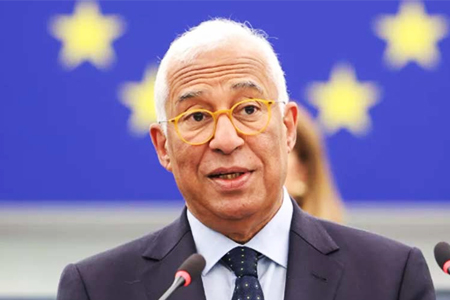 Antonio Costa: EU to deepen its partnership with Armenia, expanding cooperation in energy, trade, and digitalization
 Israeli MFA congratulates Pashinyan
 Turkish MFA comments on results of Armenian elections
  Zakharova: International observers cannot ignore `flagrant violations` in Armenian elections