

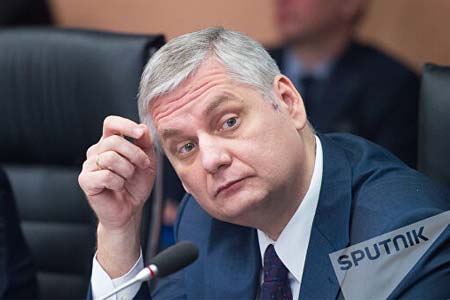
ArmInfo. Territorial integrity as Nikol Pashinyan's new value? This question was asked by Sergei Markedonov, Ph.D., leading researcher at the Center for Euro-Atlantic Security at the Institute for International Studies at MGIMO, after today's speech by RA Prime Minister Nikol Pashinyan in parliament.
The expert recalled that today, April 18, Armenian Prime Minister Nikol Pashinyan was in the tops of news feeds. "The head of the Armenian government said:" A peace agreement between Armenia and Azerbaijan is realistic if both countries clearly, without ambiguity and tricks, recognize each other's territorial integrity and undertake today and forever not to present territorial claims to each other. The Karabakh Autonomous Region was not part of the ArmSSR. All the decisions of the Armenian authorities, adopted at the end of the Soviet Union on the status of the NKAO, were not recognized by the Union authorities (of course, the leadership of the AzSSR did not support "Miatsum" by definition)," the political scientist noted.
At the same time, he stated that the news is presented as a sensation. In this vein, Markedonov recalled that exactly a year ago, the Prime Minister of Armenia in the National Assembly of his country already stated the need to "lower the bar of demands" on Artsakh.
"This speech of his led to a sharp opposition protest, which, however, soon died down. But the reasons for this development are another story. Then, after the September escalation of 2022, he announced his readiness to "make difficult decisions to guarantee long-term security, stability and peace." Even if "this decision will provide Armenia with a territory of 29.8 thousand square kilometers (the territory of the ArmSSR) long-term peace and security." At his joint press conference with French President Emmanuel Macron, Pashinyan stated: "It is necessary to sign an agreement on peace between Armenia and Azerbaijan with mutual recognition of the borders, confirmed by the agreement of December 8, 1991 ("Belovezh Accords"). Further, the Alma-Ata formula was also consolidated during the Prague meeting in October 2022. Thus, Pashinyan did not discover anything fundamentally new," the Russian expert believes.
However, he saw the nuances in everything. Markedonov stressed that the Armenian prime minister always talks about the territorial integrity of not only Azerbaijan, but also Armenia. "And this issue is not as simple as it seems. See the incidents that arise from time to time in Syunik, Gegharkunik, Tavush. Not Karabakh alone, as they say. The issue of demarcation and delimitation is no less complicated than the issue of the status of the former NKAO. Yerevan always has the opportunity to point out that Baku is not ready to support the Armenian territorial integrity strictly within the borders of the ArmSSR," the expert believes.
At the same time, the Russian political scientist drew attention to the fact that Pashinyan, like probably no one else in Armenia, knows how to change his positions. According to him, it is enough to read the election program of the "Civil Contract" (2021), where, for example, there is this: "One of the priorities of Armenia in the negotiation process will be the de-occupation of the territories in which the Artsakh people have self- determined:" "It turns out that people voted not at all for what the prime minister later proclaimed. You will say, but he changed his positions under pressure from Baku. Everything is true, but in 2018-2019, having come to power, he turned from a "dove of peace" into a hawk (Let's remember his famous metaphor: "Artsakh is Armenia and that's it!"). That is, the Prime Minister's Karabakh track is sinusoidal, not straight," he stressed.
At the same time, Markedonov is sure that the problem is not only related to Pashinyan, because opinion polls in Armenia record that the idea of transferring Nagorno-Karabakh under Azerbaijani sovereignty is not popular in society.
"However, between the formulation of a position and the readiness to defend it, there is a huge distance, which was shown by the protest waves of 2020-2022, which failed over and over again. The last point (in order, but not in importance). An accelerated peace is beneficial to the West, peace is beneficial to Moscow too, but not at the cost of squeezing it out of the settlement processes. And therefore Russia insists that a formal document should crown the process of reaching a compromise, and not precede it," Markedonov summed up.











 Political Scientist: As long as the opposition remains silent, Pashinyan can use Plan B and secure a constitutional majority
 US-Iranian memorandum more beneficial for Iran from political and economic perspective - expert
  Political analyst: While Pashinyan pledges peace with Azerbaijan, Baku continues promoting the "Western Azerbaijan" project
 Political analyst: In light of new realities, Yerevan may propose advancing peace process with Baku without constitutional referendum
 Present-day geopolitical competition shifts from territorial control to infrastructure flows
 Zakharova: Armenia views relations with Russia as tool for financially securing reorientation toward EU
 The Armenian Minister of Justice and the EU Ambassador discussed visa liberalization issues for Yerevan.
 Azerbaijan`s aggressive plans against Armenia became possible in wake of Pashinyan`s decisions on Artsakh - expert
  Zakharova: Russia sent a note of protest to Armenia over the act of vandalism at the "Mother Armenia" memorial in Gyumri
 Samvel Karapetyan proposes creating a post-election opposition coalition
 Artsakh`s Cultural Heritage Ombudsman called on Moscow to respond to destruction of WWII monuments by Azerbaijan in occupied NKR
 Prosecutor General`s Office petitions Central Electoral Commission for criminal prosecution of Robert Kocharyan
 Dutch Prime Minister expresses his support for Armenia`s democratic reform and economic diversification agenda
 Heritage: It`s time for Armenia`s opposition to present people with legitimate alternative to power
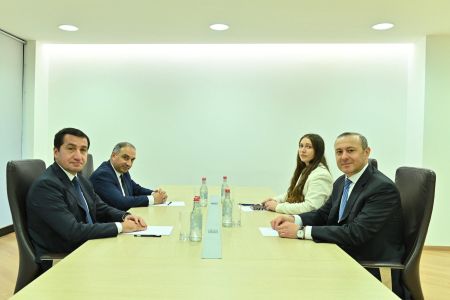 RA Security Council Sec, Assistant to President of Azerbaijan hold negotiations in Dilijan
 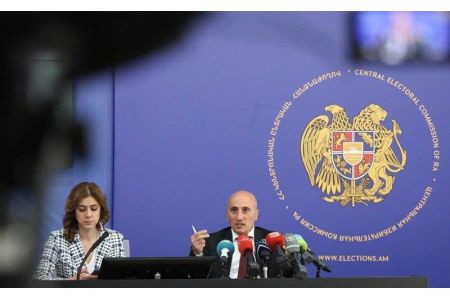 CEC Neutralizes PAP: Three Political Forces to Enter Armenian Parliament Following Election Vote
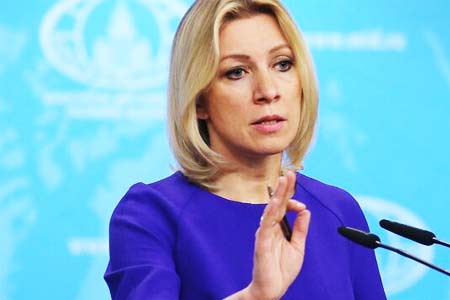 Elections in Armenia were accompanied by unprecedented pressure on opposition, RF MFA spokesperson claims
  Expert: Even OSCE observers recorded numerous violations during elections in Armenia
 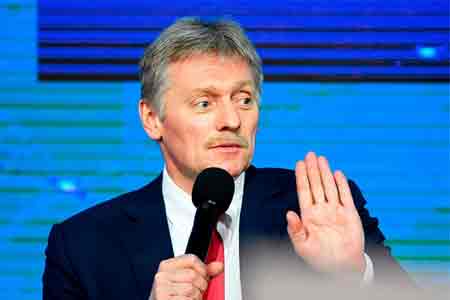 Moscow to await official results of Armenian elections - Peskov