

ArmInfo. Armenia's participation in the conference on Ukraine's reconstruction in Gdańsk, Poland, is a deliberate challenge to Moscow aimed at winning Brussels' approval. This was told to RTVI by senior research fellow at the MGIMO Institute of International Studies, Nikolai Silaev.
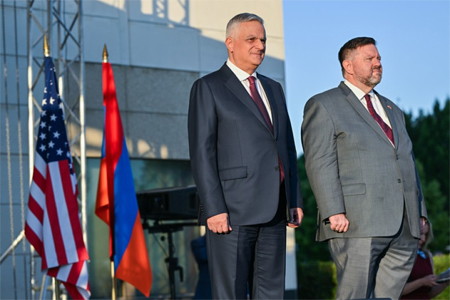
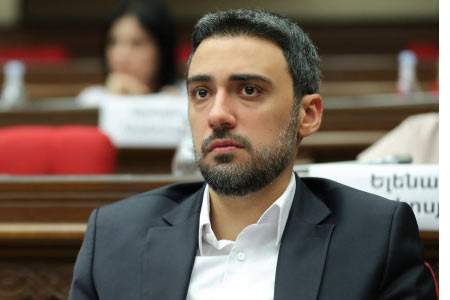
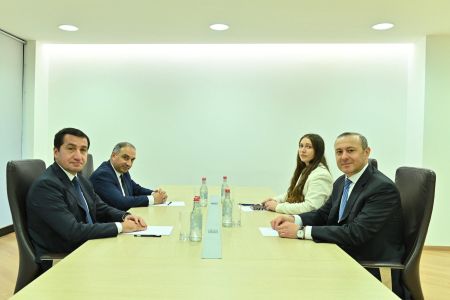
According to him, the Armenian leadership consistently chooses Brussels' approval — even at the cost of relations with Moscow. Armen Grigoryan, Secretary of the Security Council of Armenia, is taking part in the conference on Ukraine's reconstruction, jointly organized by Poland and Ukraine, on June 24–25.
The forum in Gdańsk gathered delegations from roughly 100 countries. Due to a conflict between the presidents of Poland and Ukraine, the Ukrainian delegation will be headed by Prime Minister Yuliya Svyrydenko. “Apparently, they want to further spoil relations with Russia. And to improve relations with the European Union,” Silaev told RTVI.
Political scientist and expert at the Foundation for Strategic Culture Andrey Areshev framed the issue differently in his conversation with RTVI: he believes Armenia's decision is primarily due to external pressure. In his view, Yerevan is acting under the “urgent demands or, so to speak, requests” of Brussels.
“The European Union is trying to ensure maximum unity and cohesion in its pro‑Ukraine policy and is prepared to involve in the so‑called programs for Ukraine's reconstruction even countries that are formally considered allies and partners of Russia within various Eurasian integration groupings,” he said. At the same time, Areshev is skeptical about Armenia's real contribution to the process that Brussels means by Ukraine's reconstruction: “to put it mildly, quite small.”
He says it is mainly about political, geopolitical and informational‑propaganda considerations. Experts differ on the financial side of the issue. Areshev does not rule out that the prospect of preferential treatment was one of the arguments in favor of the trip to Gdańsk. Silaev, in turn, urged a distinction be made between the interests of the Armenian authorities and those of ordinary citizens.
“The Armenian leadership — yes [expects to benefit from the trip]. Because the volume of the European Union's aid to Ukraine is increasing, and much of that volume ends up somewhere close to the Armenian leadership. But Armenia as a state — no,” he said. Asked why the risk of a negative reaction from Moscow did not stop Yerevan, Areshev allowed that it may be connected with “the overall climate of Russian‑Armenian relations at the current stage.” Silaev expressed it differently: “A pat on the shoulder from [European Commission President] Ursula von der Leyen or [French President Emmanuel] Macron is much more important to them than neighborly, partnership and allied relations with Russia.
Those are their priorities.” On June 19, the European Commission reported that it had transferred to Armenia the first tranche of an assistance package — €34 million to support the private sector affected by Russian trade restrictions. In addition to money, the agreement provides for expanded access for Armenian producers to EU markets — primarily in the agri‑food sector and floriculture. Moscow began imposing trade restrictions against the backdrop of Yerevan's rapprochement with Brussels.
From May 21 the process proceeded in stages: first Rosselkhoznadzor limited supplies of flowers, brandy and wine, then vegetables, strawberries and fish. From June 12 the ban was extended to all quarantine‑regulated products of Armenian origin. Over 90% of the republic's agricultural exports go to Russia, and the Financial Times estimated the damage at roughly €420 million a year.










 Political Scientist: As long as the opposition remains silent, Pashinyan can use Plan B and secure a constitutional majority
 US-Iranian memorandum more beneficial for Iran from political and economic perspective - expert
  Political analyst: While Pashinyan pledges peace with Azerbaijan, Baku continues promoting the "Western Azerbaijan" project
 Political analyst: In light of new realities, Yerevan may propose advancing peace process with Baku without constitutional referendum
 Moscow sees situation with Armenia as attempt to attack Russia-involving integration associations - Russian presidential aid
 Zakharova: Armenia views relations with Russia as tool for financially securing reorientation toward EU
 The Armenian Minister of Justice and the EU Ambassador discussed visa liberalization issues for Yerevan.
 Azerbaijan`s aggressive plans against Armenia became possible in wake of Pashinyan`s decisions on Artsakh - expert
  Zakharova: Russia sent a note of protest to Armenia over the act of vandalism at the "Mother Armenia" memorial in Gyumri
 Samvel Karapetyan proposes creating a post-election opposition coalition
 Artsakh`s Cultural Heritage Ombudsman called on Moscow to respond to destruction of WWII monuments by Azerbaijan in occupied NKR
 Prosecutor General`s Office petitions Central Electoral Commission for criminal prosecution of Robert Kocharyan
 Dutch Prime Minister expresses his support for Armenia`s democratic reform and economic diversification agenda
 Heritage: It`s time for Armenia`s opposition to present people with legitimate alternative to power
 RA Security Council Sec, Assistant to President of Azerbaijan hold negotiations in Dilijan
  CEC Neutralizes PAP: Three Political Forces to Enter Armenian Parliament Following Election Vote
 Elections in Armenia were accompanied by unprecedented pressure on opposition, RF MFA spokesperson claims