

ArmInfo. The Armenian National Congress Party called on the opposition to unite.
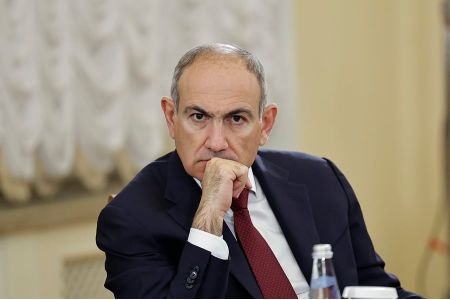
The party's statement notes that, under the pretext of creating a constitutional majority, supposedly necessary for the speedy establishment of peace with Azerbaijan, the regime of Armenian Prime Minister Nikol Pashinyan has begun a process of restricting democratic and civil liberties and the creation of institutional foundations for self-government in Armenia. Despite Foreign Minister Ararat Mirzoyan's admission in public debates that all major opposition forces accept the peace treaty he signed, all opponents of the government have been declared "war parties" and enemies of peace. During the elections, widespread and systematic violations of electoral law were committed, distorting the will of Armenian citizens and undermining the legitimacy of state power. In clear violation of Article 101 of the Electoral Code and undermining citizens' electoral rights, the Central Electoral Commission illegally awarded Nikol Pashinyan's party four additional mandates, giving the ruling party a majority and significantly weakening the system of checks and balances.
"The Civil Contract Party, led by Nikol Pashinyan, in cooperation with the Ministry of Internal Affairs, has introduced an unconstitutional bill amending the Electoral Code, according to which only citizens who have permanently resided in Armenia over the past year will have the right to vote in referendums and elections to the National Assembly. The purpose of the bill is to exclude approximately half a million citizens from the electoral lists of the Republic of Armenia, which will allow the regime to significantly facilitate the implementation of constitutional amendments imposed by Azerbaijan and strengthen Pashinyan's personal authority. The regime's long-term goal is to form a constitutional majority in parliament at any cost and adopt a Constitution that will, on the one hand, fulfill Azerbaijan's demand and eliminate the state and legal basis of Armenia's independence - the Declaration of Independence, and on the other hand, finally eliminate the last remnants of constitutional checks and balances that hinder Nikol Pashinyan's personal authority. To achieve this goal, the regime cynically exploits the international community's support for the peace process with Azerbaijan, trying to turn it into support for its attempts to establish "an authoritarian anti-democratic regime," the statement said.
Its authors note that in the current situation, the Armenian National Congress proposes that all opposition forces concerned about the fate of democracy and sovereignty create a nationwide united front for the "No" movement. "We propose, based on the results of joint consultations, to form a single governing body of the 'No' movement and organize joint activities with the following goals and areas: holding joint mass public protests against the results of the falsified elections to the National Assembly on June 7, 2026, and appealing the illegal decisions and actions of the regime associated with them; fighting for the speedy holding of early elections to the National Assembly of the country, which is the only way to overcome the crisis caused by the illegitimacy of state power; opposing all illegal attempts by the regime to create a constitutional majority through fraud and repression; opposing any amendments to Article 202 of the Constitution, which determines the procedure for adopting or amending a new Constitution, that could lower the threshold of 2/3 of the votes of the National Assembly deputies required to submit a draft of a new Constitution to a referendum," the statement emphasizes.
It is also proposed to develop a new draft Constitution based on the semi-presidential model adopted in 1990 through national consensus, which, along with the necessary legal and political norms, will retain the reference to the Declaration of Independence and, on the other hand, will create constitutional mechanisms of checks and balances that will ensure the real independence of the judiciary, investigative bodies, the Central Electoral Commission and other state institutions from the executive branch, thereby restoring the institutional foundations of democracy and civil liberties.





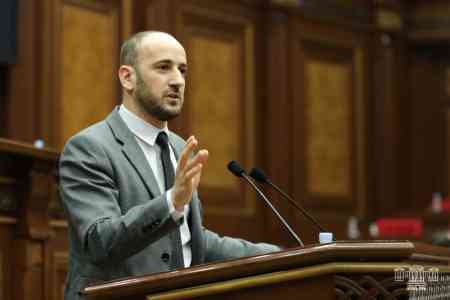


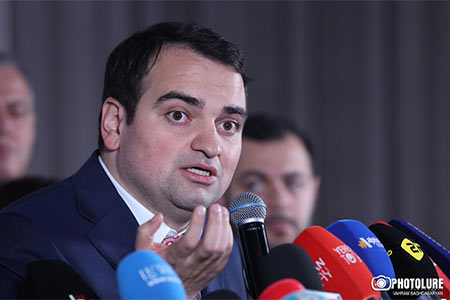
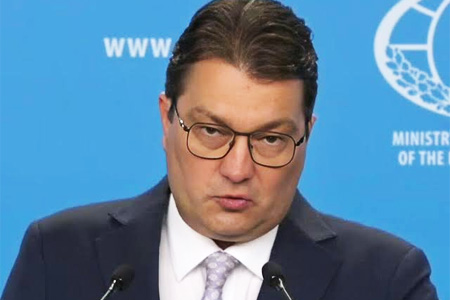

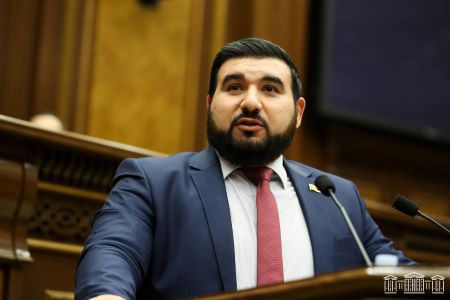



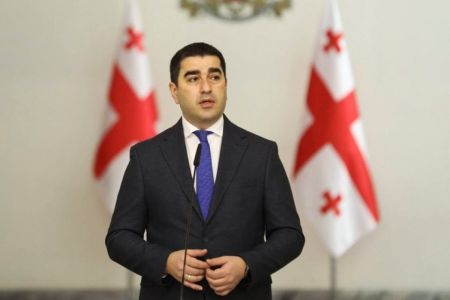




 Analyst: The primary issue with Armenia`s new Parliament Speaker`s speech lies is its one-sided interpretation of the causes of the political crisis
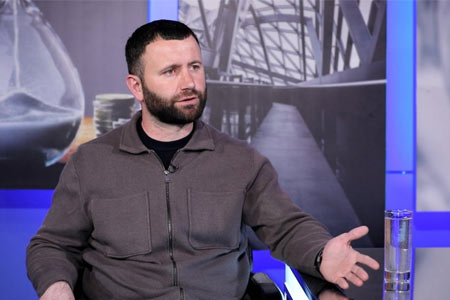
 Expert: Gagik Tsarukyan embodies post-Soviet model of big business-state relations; this model is used in many other post-Soviet countries
 Expert: Azerbaijan promoting aggressive plans against Armenia at state level
 Iranologist: Baku`s propaganda of might masks the country`s inability to provide water to its own population
 NA Vice Speaker candidate believes his wife`s salary as director of HayPost is the lowest in the company`s history
 RF Permanent Representative: There is no CSTO-Armenia conflict
 Moscow: NATO seeking to "Pull" Armenia away from CSTO Allies
  Political analyst: Russia intends to determine which "Camp" Armenia will choose through a referendum
 Narek Karapetyan will give up his parliamentary salary in favor of charitable contributions.
 Armenia and France discuss further development of strategic partnership and EU cooperation
  To overcome risks Armenia must reduce domestic escalation - expert
  Zatulin: Pashinyan was eager to get back to Russia because he actually lost the elections
 Human rights activist Ruben Melikyan dismissed from YSU
 Zakharova: Armenia`s pro-EU pivot poses economic security risks to EAEU member states
 It`s time for South Caucasus countries to think of South Caucasus as single, unified region - RA premier
  Pashinyan: Armenia and Azerbaijan should leave each other alone
 Moscow sees situation with Armenia as attempt to attack Russia-involving integration associations - Russian presidential aid