
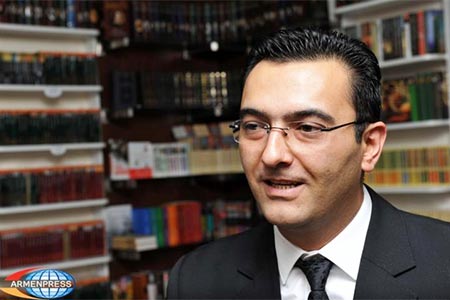
ArmInfo. There are at least two states interested in destabilizing the situation in Armenia, but they are not openly demonstrating such intentions. This was stated by political analyst Abraham Gasparyan, founder and director of the Genesis Armenia analytical center, during a press conference in Yerevan, when asked whether Syunik could become a flashpoint where global players would find it more advantageous to maintain instability rather than reach a final resolution.
According to him, Turkey is one of these countries. The expert believes that the events in Syria should have served as a lesson for Armenia. In the analyst's view, the Armenian authorities erroneously believe that the normalization of relations with Turkey will automatically lead to new opportunities or the opening of borders. As Gasparyan explained, this approach fails to account for the scale of Ankara's regional ambitions. In this regard, he recommended reviewing Ahmet Davutoglu's 2013 geopolitical doctrine "Strategic Depth," noting that the Balkans and Syunik are highlighted among its key focal areas. "In this sense, it must be kept in mind that Turkey is a regional-caliber player, making it necessary to interact with it with extreme caution. Even the United States understands this," the political analyst noted.
According to the expert, the U.S. operates in the region primarily through proxies because it lacks direct strategic interests here. Turkey, he argued, serves as such a proxy for the U.S. The second country interested in destabilizing the situation, according to the analyst, is Iran. However, Gasparyan clarified that Tehran might only be interested in this under one condition—if the Trump Route (TRIPP) is implemented.







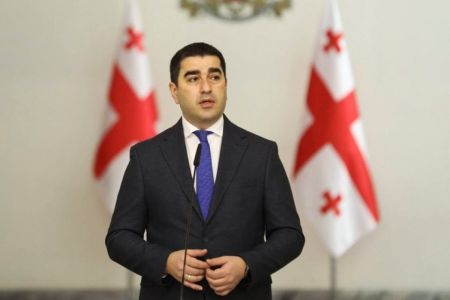














 Analyst: The primary issue with Armenia`s new Parliament Speaker`s speech lies is its one-sided interpretation of the causes of the political crisis
 Expert: Gagik Tsarukyan embodies post-Soviet model of big business-state relations; this model is used in many other post-Soviet countries
 Expert: Azerbaijan promoting aggressive plans against Armenia at state level
 Iranologist: Baku`s propaganda of might masks the country`s inability to provide water to its own population
 NA Vice Speaker candidate believes his wife`s salary as director of HayPost is the lowest in the company`s history
 RF Permanent Representative: There is no CSTO-Armenia conflict
 Moscow: NATO seeking to "Pull" Armenia away from CSTO Allies
  Political analyst: Russia intends to determine which "Camp" Armenia will choose through a referendum
 Narek Karapetyan will give up his parliamentary salary in favor of charitable contributions.
 Armenia and France discuss further development of strategic partnership and EU cooperation
  To overcome risks Armenia must reduce domestic escalation - expert
  Zatulin: Pashinyan was eager to get back to Russia because he actually lost the elections
 Human rights activist Ruben Melikyan dismissed from YSU
 Zakharova: Armenia`s pro-EU pivot poses economic security risks to EAEU member states
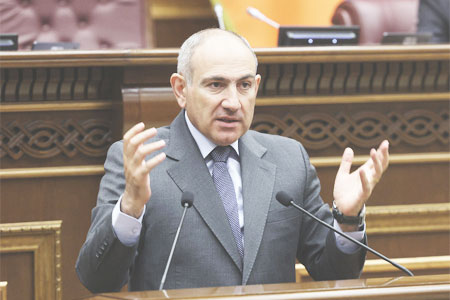 It`s time for South Caucasus countries to think of South Caucasus as single, unified region - RA premier
  Pashinyan: Armenia and Azerbaijan should leave each other alone
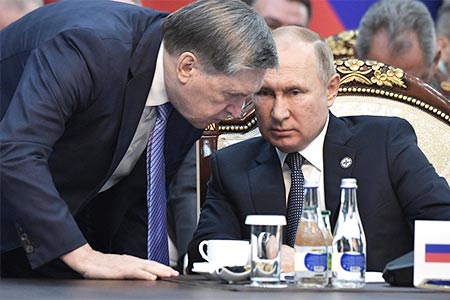 Moscow sees situation with Armenia as attempt to attack Russia-involving integration associations - Russian presidential aid