

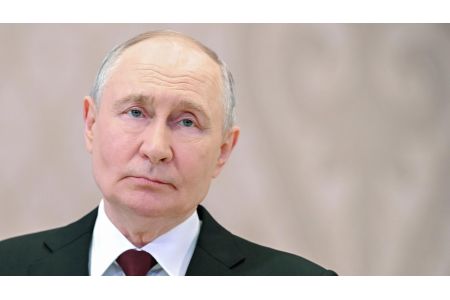
ArmInfo. According to preliminary expert estimates, Armenia's withdrawal from the Eurasian Economic Union (EAEU) will lead to a loss of at least 14% of its GDP, as stated by Russian President Vladimir Putin during a press conference, while discussing the benefits of Armenia's membership in the European Union (EU).
According to Putin, discussions on this issue must only be frank, sincere, and completely transparent. "There are no secrets; I believe everyone should know this. But before that, I would like to say that the Russian and Armenian peoples have been bound by bonds of friendship and a special relationship for centuries. I told Armenian Prime Minister Nikol Pashinyan: whatever is good for Armenians is acceptable and good for Russia. Do as you see fit, based on the interests of the Armenian people. You are in power, you are responsible, whatever you decide, that is how it will be. This will not spoil our humanitarian or political ties. But now we are talking strictly about economic substances. Everything needs to be calculated, carefully reviewed, and a decision made. I have already mentioned this before: the crisis in Ukraine began with attempts to accede to the EU. We weren't against it, but we said that the standards were completely different. There are many things that are simply incompatible today. This doesn't mean we are against it; we are for it, but it requires time and capital investment," the Russian president stated.
It is for this very reason, as Putin noted, that combining the two (the EAEU and the EU) is virtually impossible today. "And for this same reason, we will be forced to wind down all of our work—in this case with Armenia in the economic sphere, particularly within the framework of integration processes," he emphasized.
Speaking on the benefits of Armenia's membership in the EAEU, Russian President Vladimir Putin highlighted access to a large and protected market within the EAEU, duty-free trade, common technical and phytosanitary standards, simplified logistics, low energy prices, and active investment. In this regard, he noted that, according to the latest data from the EAEU Development Bank (EDB), accumulated investments in Armenia total $4.9 billion, with 86% originating from Russia. Putin emphasized that this figure does not include additional Russian capital. "After the meeting in Yerevan, our European partners pledged to invest 2.5 billion euros. How and when these investments will materialize remains to be seen, but it is still less than $4.9 billion," he said.
Putin also urged to consider the fact that Armenia's withdrawal from the EAEU would end its participation in the union's free trade agreements. He warned that this would result in the reinstatement of full-scale customs controls and duties, the suspension of mutual recognition for phytosanitary certifications, and a decline in trade in services, including tourism and transport.
"This also means applying the regulations currently in place for CIS migrants to workers from Armenia. In other words, they will have to purchase work patents to operate in Russia, and to secure permanent residency, they will need to have resided there for at least five years. There are numerous requirements, and everyone must speak about this clearly, transparently, and honestly," Putin noted.
He added, "We will also have to revert to a permit-based system for Armenian road carriers. This is unavoidable, and it is a distinct, complex area of cooperation. Furthermore, we will have to increase rail freight tariffs from Russia's domestic rates to those applied to CIS countries. Beyond that, energy prices will also rise. The preferences Armenia enjoys today will no longer exist." According to the Russian president, preliminary expert estimates indicate that this would result in Armenia losing at least 14% of its GDP.
"Whether that is a lot or a little is another matter. However, all of this must be weighed carefully. If we look at the last three years—from 2023 to 2025—Russia's GDP grew by 10.3%, while the EU grew by 3%, and the EAEU by 11.4%. One bloc generated economic growth, while the other did not. We would ask our Armenian friends—and the Prime Minister of Armenia himself has spoken about this—to hold a referendum on where Armenia should be: in the EAEU or the EU. And we would request that this be done as soon as possible," Putin concluded.
Recall, on January 9, 2025, the Armenian government approved a draft law initiating the process of accession to the European Union, proposed by the "Eurakve" civic initiative. The draft legislation was subsequently submitted to parliament, which adopted it in the final reading on March 26 before forwarding it to the president for signature. The law was signed on April 4.
Moscow has repeatedly stated that simultaneous membership in both the Eurasian Economic Union (EAEU) and the European Union is impossible. On May 9, 2026, Russian President Vladimir Putin told journalists that Armenia should decide on its future membership in the EU and the EAEU "as soon as possible," adding that Russia would be ready to begin a "civilized divorce" if necessary. Yerevan, for its part, responded by stating that Armenia would leave the EAEU whenever it considered such a step necessary.
It should be noted that, according to the RA Statistics Committee, foreign trade turnover between Armenia and EAEU member states declined by 36.9% in 2025, totaling just over $8 billion. Export volumes fell by 5% to $3.2 billion, while imports dropped by 48.5% to $4.8 billion.
Trade with Russia, Armenia's largest EAEU partner, declined by 38.3% during the reporting period, amounting to $7.6 billion. At the same time, trade with Belarus increased by 22.9% to $251.4 million, while trade with Kazakhstan grew by 6.3% to $115.9 million. Trade turnover with Kyrgyzstan, however, fell by 23.2% to $11.3 million. Overall, EAEU countries accounted for 37.5% of Armenia's foreign trade turnover. In Q1 2026, trade turnover between Armenia and EAEU member states decreased by 15.6% year- on-year to $1.4 billion. Exports fell by 6.5% to $685.9 million, amid a 22.6% decline in imports to $722.7 million.






 Politician: The Moldovan scenario in Armenia will lead to revolution
 American agenda in South Caucasus has two priorities: TRIPP project and increasing pressure on Iran - expert
 Armenian political scientist outlines two likely goals for tomorrow`s visit by U.S. Secretary of State to Yerevan
  Domestic escalation to lead to external escalation soon - expert
  Opinion: Situation within Armenia and on its borders will largely depend on developments surrounding Iran
 CSTO Secretary General: Dual Membership in EU and EAEU "highly difficult"
 Armenia a passenger who wants to get from point A to point G - Maria Zakharova
 EU prepares support for Armenia amid economic restrictions imposed by Russia - media
 Catholicos: We must make every possible effort to ensure justice prevails for the people of Artsakh
 Opposition leader names newly built schools in Vayots Dzor to be handed over to Azerbaijanis
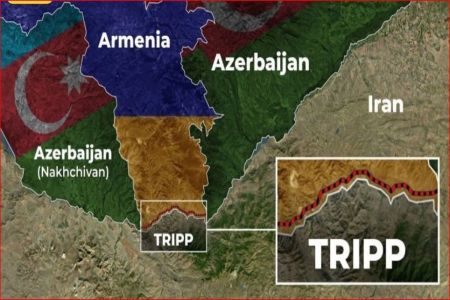 Expert: Armenia and Azerbaijan are participating in the US geopolitical game to encircle Iran
 Medvedev likens Pashinyan`s stance on EAEU/ EU referendum to Trotsky`s formula
 Breavis accuses EuroNews of spreading false information regarding Armenian elections
 Choice between EU and EAEU is choice between unrealizable dream and certainty