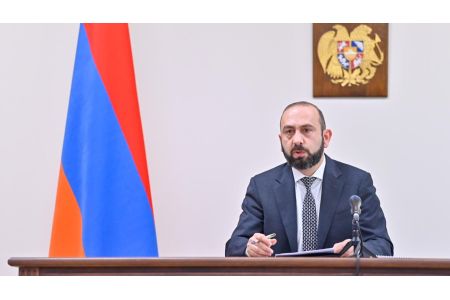
ArmInfo. Armenia has absolutely no desire to create tensions in Armenian-Russian relations: in political dialogue, in economic relations, neither in bilateral nor within multilateral cooperation platforms—the EAEU, the CIS, and others. Armenian Foreign Minister Ararat Mirzoyan made this statement at a press conference in Yerevan on May 26, while commenting on current bilateral frictions and recent trade disruptions involving the export of "Jermuk" mineral water, flowers, fruits, and alcoholic beverages.
Mirzoyan stated that the Armenian authorities are aware of certain statements being made by their Russian colleagues. We believe that all problems that have arisen or may arise—and issues inevitably emerge from time to time in any relationship—should be discussed in a healthy, constructive, and partner-like atmosphere to find solutions. I notice a tendency to attribute these issues to some geopolitical tension between Armenia and Russia, or to frame them as a consequence of Armenia's European, pro-European, or pro-Western orientation—as some put it—or to link them to the upcoming elections. I'm afraid to disappoint those who think so: problems of this kind have always existed," the Armenian Foreign Minister added.
Mirzoyan said that anyone making the effort could also find examples of difficulties involving exports of fruit, vegetables or alcoholic beverages from Armenia to Russia dating back five to 25 years. " If you look through past media reports, this issue has always come up from time to time. And today, as soon as the harvest season opens, some issue regarding a specific fruit or vegetable inevitably arises .And it's also very important to note—for example, they say 'alcohol.' This is not true. It's not as if wine imports are banned. The problem is linked to a specific company, and not to all of that company's products, but to one specific type of product. And why do we rule out the possibility that these problems could also be objective? After all, sometimes we also see dishonest practices on the part of producers in one area or another. I don't want to say that this is necessarily the case, but it's obviously not the case that this hasn't happened before, and now, against the backdrop of our election campaign or some other narrative, the Russian authorities are taking such steps. Again, to summarize: problems exist, these problems have always arisen, and we are determined to find solutions in an atmosphere of constructive, healthy, partner-based discussions," he continued.
In this context, Mirzoyan emphasized the need for economic diversification. "It's impossible, even theoretically, to abstract from Armenian-Russian relations or from these days. For any country, it's always very useful and definitely advantageous to have diverse sources of both supply and consumption. This is such an axiomatic truth, and I believe that both the Armenian government and businesses should make efforts in this direction. Ultimately, governments can sign agreements, reach understandings, and create an environment, but commerce itself must be carried out by businesses and companies. So we intend to move in this direction as well. Yes, diversification is essential for us, and we must take continuous steps toward securing new import sources and consumer markets," he concluded.









 Expert: Current process is not about peace, but implementing Azerbaijan`s wishlist
 Expert: Real peace unattainable until Armenia-Azerbaijan agreement is signed and ratified
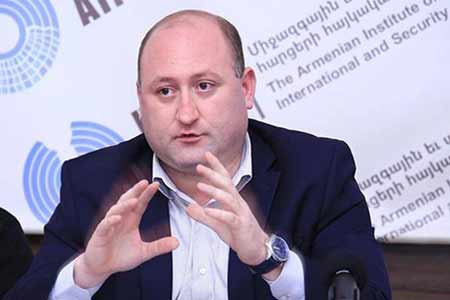 TRIPP`s proximity to Iranian border could slow its implementation - expert
 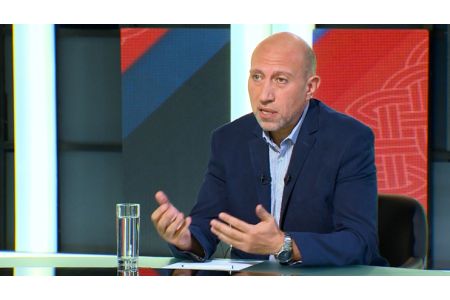 Who and why is sacrificing RA National Security Service`s reputation? - expert
 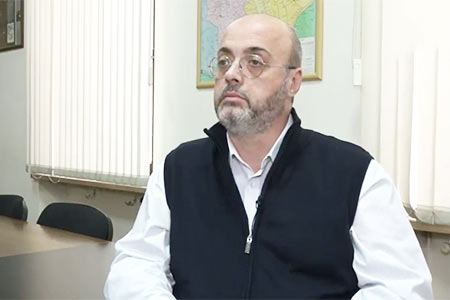 Tehran creating security environment in which sustainable shipping in Strait of Hormuz difficult to imagine without its direct participation - expert
 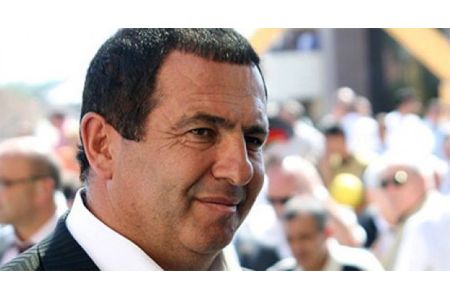 Arrested Armenian oligarch on economy and new jobs
 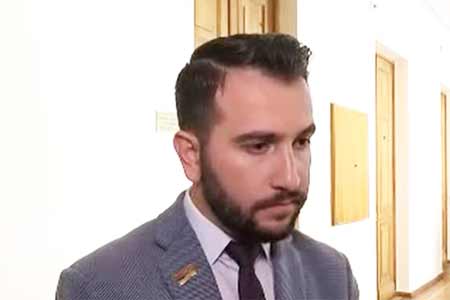 NA Vice Speaker candidate believes his wife`s salary as director of HayPost is the lowest in the company`s history
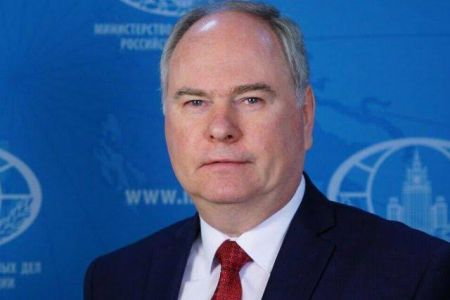 RF Permanent Representative: There is no CSTO-Armenia conflict
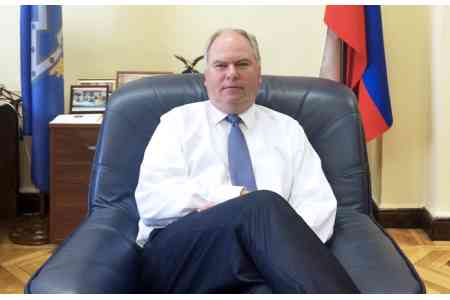 Moscow: NATO seeking to "Pull" Armenia away from CSTO Allies
 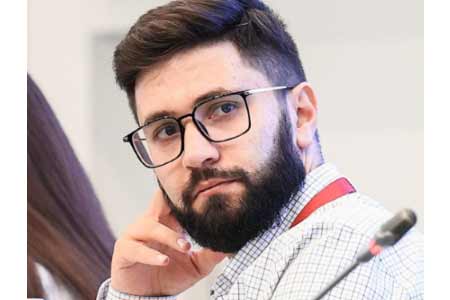 Political analyst: Russia intends to determine which "Camp" Armenia will choose through a referendum
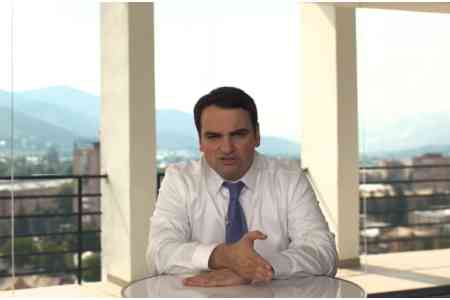 Narek Karapetyan will give up his parliamentary salary in favor of charitable contributions.
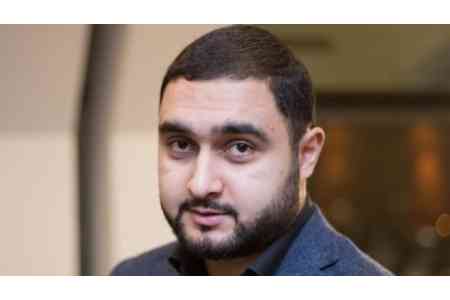 Armenian analyst: Developing relations with Europe and the U.S. must not jeopardize relations with regional powers
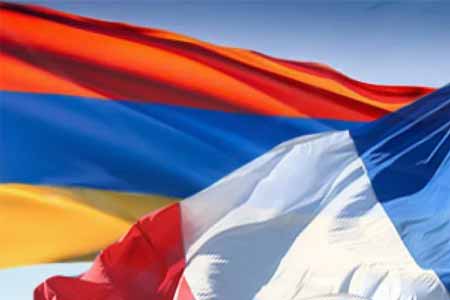 Armenia and France discuss further development of strategic partnership and EU cooperation
 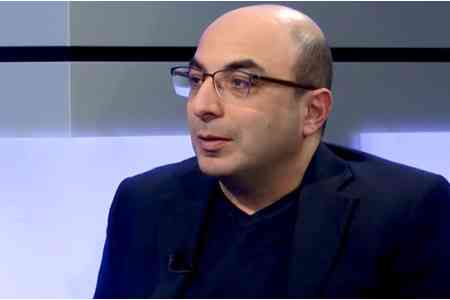 To overcome risks Armenia must reduce domestic escalation - expert
 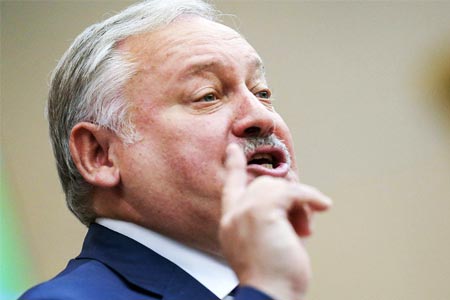 Zatulin: Pashinyan was eager to get back to Russia because he actually lost the elections
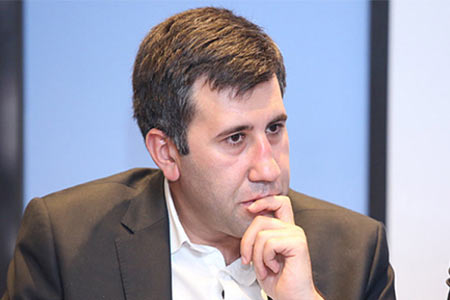 Human rights activist Ruben Melikyan dismissed from YSU
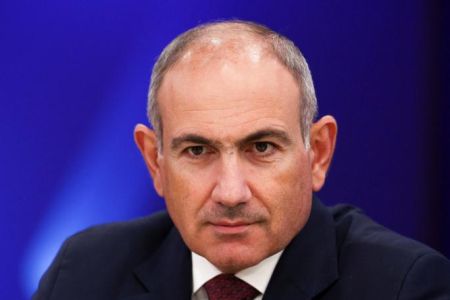 Pashinyan removed from INNOPROM guest list
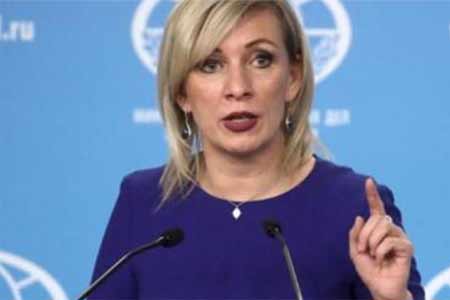 Zakharova: Armenia`s pro-EU pivot poses economic security risks to EAEU member states
 It`s time for South Caucasus countries to think of South Caucasus as single, unified region - RA premier
  Pashinyan: Armenia and Azerbaijan should leave each other alone