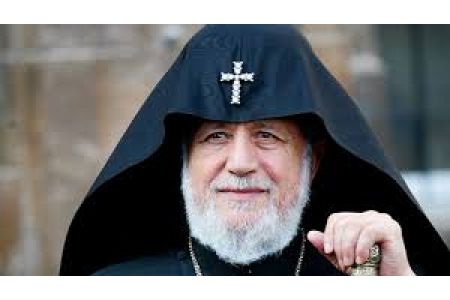
ArmInfo. Only national unity will enable Armenia to intensify efforts to recognize the Armenian Genocide and develop steps and initiatives for national progress, peaceful and secure life. This is stated in the message of Catholicos of All Armenians Garegin II on the occasion of the 111th anniversary of the Armenian Genocide in the Ottoman Empire.
As reported by the press office of the Mother See of Etchmiadzin, in his message, the Catholicos recalled that today, Armenia and the Diaspora honor the memory of the holy martyrs of the Armenian Genocide in the Ottoman Empire, who were immortalized for preserving in their souls an eternal love for Christ and the Homeland. Garegin II noted that April 24 symbolically sums up the collective suffering of the Armenian people, which includes the memories of one and a half million Armenian martyrs, children who lost their homeland, Armenian monasteries and churches subjected to cultural genocide, and destroyed settlements.
"However, this tragedy did not break the spirit of our nation. Our people survived the Genocide, were reborn, and restored independent Armenian statehood. April 24 is a day of oath, closely linked to the demand of the Armenian people scattered throughout the world - a day free from hostility and hatred, aimed at restoring justice and truth, and eradicating the denial of the catastrophic genocide," stated Garegin II.
His Holiness also recalled that a century after the catastrophic events of the Genocide, when it seemed that such horrific crimes were a thing of the past, unfortunately, as a result of new genocidal actions, 120,000 Artsakh residents were forcibly displaced from their homeland. In this difficult situation and the existing threats, as Garegin II noted, the sacrifice of the martyrs of the Armenian Genocide obliges the Armenian people to strengthen unity, solidarity, and the Armenian state.
"Indeed, it is through national unity that we can intensify efforts for the universal recognition of the Armenian Genocide and the development of steps and initiatives for national progress, a peaceful and secure life," the Catholicos of All Armenians concluded.
It should be recalled that on April 24, 1915, in Constantinople, the capital of the Ottoman Empire, the extermination of Armenian subjects began. It began with the arrests of representatives of the Armenian intelligentsia-writers and poets, architects and parliamentarians-and then escalated into the complete extermination of Armenians. As a result of these actions by the Turkish authorities, more than 1.5 million Armenians were deported, starved, and tortured to death. The Armenian Genocide has been recognized by the Council of Europe (1998, 2001),the European Parliament (1987, 2000, 2002, 2005), the UN Sub-Commission on Prevention of Discrimination and Protection of Minorities[7], the World Council of Churches, the Parliamentary Coalition of South American Countries (Mercosur), and the Parliament of Latin America (2015).
The Armenian Genocide has been recognized and condemned by many countries and influential international organizations. The Parliament of Uruguay was the first to officially recognize and condemn the mass killings of Armenians (1965). The extermination of Armenians has been officially recognized as genocide (under international law) and condemned by: Austria (joint statement of the chairmen of parliamentary factions, 2015), Argentina (2 laws, 5 resolutions; 2004, 2007), Armenia (1964 as part of the USSR, 1988, 1990), Belgium (1998, 2015), Bulgaria (2007, 2015), Bolivia (2014), Brazil (2015), Vatican City (2015), Venezuela (2005), Germany (2016), Greece (1996), Italy (2000, 2019), Canada (1996, 2002, 2004), Cyprus (1975, 1982), Latvia (2021), Lebanon (1997), Libya (2019); On April 18, 2019, the Interim Government of Libya adopted a resolution recognizing the Armenian Genocide. Lithuania (2005), Luxembourg (2015), Netherlands (2004, 2018), Paraguay (2015), Poland (2005), Portugal (2019), Russia (1995), Syria (2020), Slovakia (2004), USA (2019, 2021); On April 24, 2021, US President Joe Biden officially recognized the Armenian Genocide. Uruguay (1965), France (1998, 2000, 2001, 2006), Czech Republic (2015, 2017, 2020), Chile (2007), Switzerland (2003), Sweden (2010). Turkey continues its policy of denial of this crime against humanity.
















 Opinion: Following Berlin talks, Baku gains expanded influence within EU and strengthens cooperation ties with main European powerhouse
 Armenian expert: Could modern Azerbaijan even exist without Russian and Soviet modernization?
 Zatulin: Pashinyan was eager to get back to Russia because he actually lost the elections
 Human rights activist Ruben Melikyan dismissed from YSU
 Pashinyan removed from INNOPROM guest list
 Zakharova: Armenia`s pro-EU pivot poses economic security risks to EAEU member states
 It`s time for South Caucasus countries to think of South Caucasus as single, unified region - RA premier
  Pashinyan: Armenia and Azerbaijan should leave each other alone
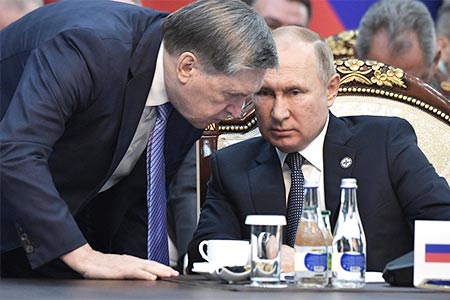 Moscow sees situation with Armenia as attempt to attack Russia-involving integration associations - Russian presidential aid
 Zakharova: Armenia views relations with Russia as tool for financially securing reorientation toward EU
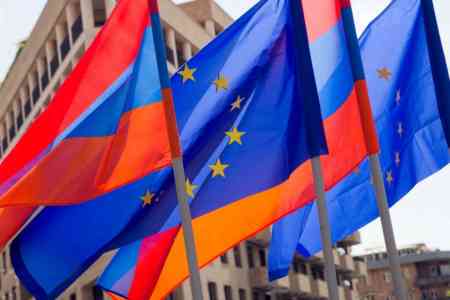 The Armenian Minister of Justice and the EU Ambassador discussed visa liberalization issues for Yerevan.
 Azerbaijan`s aggressive plans against Armenia became possible in wake of Pashinyan`s decisions on Artsakh - expert
  Zakharova: Russia sent a note of protest to Armenia over the act of vandalism at the "Mother Armenia" memorial in Gyumri
 Samvel Karapetyan proposes creating a post-election opposition coalition