

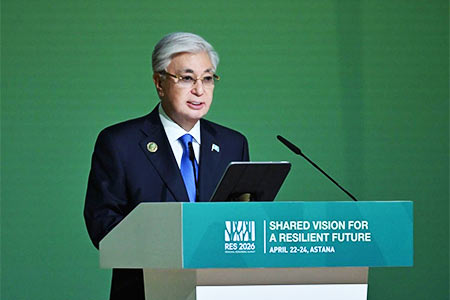
ArmInfo. Today, on Earth Day, we have gathered in Astana to reaffirm our shared responsibility to protect our planet. This means that the countries of the region clearly understand the urgency and critical importance of having a vision for achieving a sustainable future. This was stated by President of the Republic of Kazakhstan Kassym-Jomart Tokayev on April 22, opening the plenary session of the Regional Ecological Summit (RES).
He noted that in many cases, environmental programs are developed and shaped without adequately considering the development needs of various regions and countries. This is especially true for developing countries that are still in the process of building their economic potential. Meanwhile, developed countries have already achieved their current environmental standards thanks to long periods of industrialization.
"That's why the global transition must be balanced, fair, and incentivizing. Our shared approach must be well-founded, pragmatic, and carefully considered to enable countries to move forward sustainably without compromising their opportunities for economic growth and progress. Environmental cooperation must serve as a reliable tool for unity. It must be based on partnership, trust, and shared responsibility. Without judgment, without blame, and without accusations. As partners, we must work pragmatically and responsibly to support peace and sustainable development," the Kazakh president said.
He noted that Central Asia and neighboring regions face common environmental challenges, including water scarcity, ineffective water resource management, desertification, air pollution, and biodiversity vulnerability. "The time has come to develop solutions. Kazakhstan places particular emphasis on environmental responsibility at the highest legal level. Our new Constitution clearly reflects environmental protection as a fundamental priority of state policy and societal responsibility. Kazakhstan reaffirms that environmental security is a true value that must be embedded in our DNA and in our long-term vision of progress," Kassym-Jomart Tokayev noted.
Kazakhstan, he added, is pursuing a policy of transition to cleaner energy aimed at protecting biodiversity, restoring degraded lands, modernizing water management systems, and strengthening regional environmental cooperation. "We recognize that no country can succeed alone, so we must pay special attention to these issues through joint efforts at the regional and global levels," the Kazakh leader emphasized.
The Regional Environmental Summit (RES) is being held in Astana from April 22 to 24 under the theme "A Shared Vision for a Sustainable Future." The event aims to develop comprehensive policies and tools for the protection, restoration, and shared use of ecosystems, water, and land resources, as well as the conservation of biodiversity in Central Asian countries.
Organized by the Ministry of Ecology and Natural Resources of Kazakhstan jointly with the United Nations and several international organizations, the RES is the first large-scale event aimed at developing joint solutions reflecting a regional approach to overcoming environmental challenges.














 Politician: The Moldovan scenario in Armenia will lead to revolution
 American agenda in South Caucasus has two priorities: TRIPP project and increasing pressure on Iran - expert
 Armenian political scientist outlines two likely goals for tomorrow`s visit by U.S. Secretary of State to Yerevan
  Domestic escalation to lead to external escalation soon - expert
  Opinion: Situation within Armenia and on its borders will largely depend on developments surrounding Iran
 CSTO Secretary General: Dual Membership in EU and EAEU "highly difficult"
 Armenia a passenger who wants to get from point A to point G - Maria Zakharova
 EU prepares support for Armenia amid economic restrictions imposed by Russia - media
 Catholicos: We must make every possible effort to ensure justice prevails for the people of Artsakh
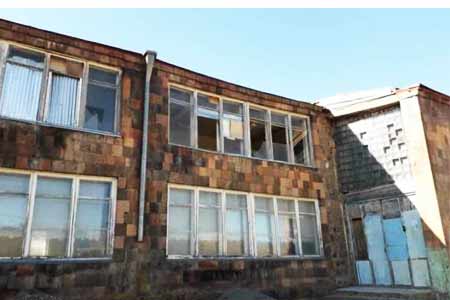 Opposition leader names newly built schools in Vayots Dzor to be handed over to Azerbaijanis
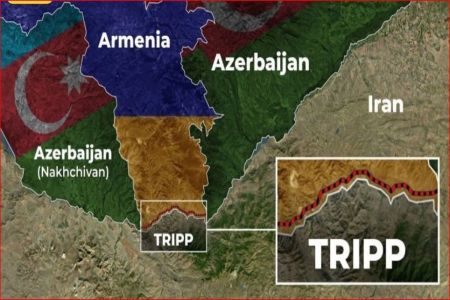 Expert: Armenia and Azerbaijan are participating in the US geopolitical game to encircle Iran
 Medvedev likens Pashinyan`s stance on EAEU/ EU referendum to Trotsky`s formula
 Breavis accuses EuroNews of spreading false information regarding Armenian elections
 Choice between EU and EAEU is choice between unrealizable dream and certainty