
ArmInfo. The main value of the Regional Ecological Summit (RES) is that it moves problematic issues from the discussion level to practical implementation.
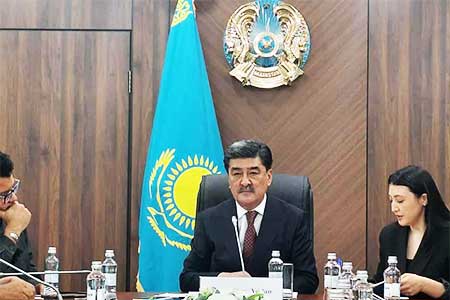
Kazakhstan's Minister of Ecology and Natural Resources, Yerlan Nysanbayev, announced this on April 21 at a meeting with journalists who arrived in Astana to cover the RES.
Noting that environmental challenges know no borders - droughts, desertification, climate change, and the state of ecosystems affect several countries simultaneously - the minister emphasized that solutions must be developed jointly. "This is especially relevant for Central Asia. The region needs coordinated approaches to water security, climate adaptation, and ecosystem protection," Nysanbayev noted.
According to him, the summit creates a platform where the environment becomes not a topic of contention, but a foundation for trust, partnership, and long-term cooperation. Speaking about the upcoming work of the RES, the Minister of Environmental Protection announced that heads of state, representatives of the UN, international organizations, financial institutions, businesses, the expert community, and the media are expected to participate. "This composition demonstrates that this is not just about exchanging opinions, but also about developing solutions that can change the regional agenda for years to come," Nysanbayev stated.
He also noted that the program includes 58 sessions, the preparation of 51 documents, as well as initiatives and investment agreements worth over $2 billion. "This means that the conversation about the environment is moving to the realm of specific mechanisms, technologies, institutions, and financing," the minister stated. He added that the Regional Environmental Summit in Astana is an important step toward developing a new model of cooperation in Central Asia. In a broader regional context, he said, the RES also opens opportunities for dialogue with other states. The minister recalled that Kazakhstan has adopted a strategy to achieve carbon neutrality by 2060, which includes specific measures in energy, industry, agriculture, and waste management, as well as mechanisms for a just transition to green finance. Furthermore, Kazakhstan has committed to reducing net greenhouse emissions across the economy by 17% below 1990 levels by 2035. This goal is unconditional and is enshrined in the updated nationally determined contribution (NDC) as part of the country's climate policy. "All these steps will help us achieve ambitious climate goals and promote global sustainability," Nysanbayev said.
According to him, the expected outcomes of the summit include a declaration on environmentally sustainable development for the countries of Central Asia, a partnership program with the UN for 2026- 2030, as well as an initiative to preserve biodiversity, combat land degradation, and develop climate cooperation. Particular attention will be paid to the Caspian Sea as a crucial element of regional environmental stability.
Nysanbayev also announced an international exhibition of green technologies, which will be held during the summit.
The exhibition will bring together participants from 30 countries and a wide range of international partners. The exhibition will feature 120 pavilions showcasing cutting-edge solutions in sustainable development. The minister emphasized that hosting the summit for Kazakhstan is not simply a sign of its status as host, but a demonstration of its responsibility and readiness to shape a unifying agenda, offer a platform for joint solutions, and strengthen regional cooperation based on trust and mutual benefit. "The main point of the summit is that the countries of the region should not only discuss problems but also jointly develop solutions," the head of the department emphasized, adding that an agenda for sustainable development and shared responsibility is being formed in the center of Eurasia.
The Regional Environmental Summit 2026 was initiated by Kazakh President Kassym-Jomart Tokayev and aims to unite the countries of Central Asia to develop common solutions to combat climate change in partnership with the UN. This two-year preparatory process began in 2024 and culminates in a High-Level Summit in 2026, where agreed environmental initiatives and mechanisms for regional cooperation will be presented.
The goal of the Regional Environmental Summit 2026 is to create an open platform for developing joint and practical solutions to climate and environmental challenges, uniting a wide range of countries, regions, and partners, and demonstrating, using the example of Central Asia, how interregional cooperation strengthens global efforts.
The summit received broad support from international partners, including the UN, the Secretariats of the three Rio Conventions (the UN Framework Convention on Climate Change (UNFCCC), the UN Convention on Biological Diversity (CBD) and the UN Convention to Combat Desertification (UNCCD)), UNECE, UNDP, UN-Habitat, UNEP, UNICEF, UNFPA, FAO, UNESCO, UNIDO, WMO, ILO, OECD, IEA, IRENA, ADB, WB, IMWI, SWITCH-Asia and other organizations. In particular, the United Nations expressed support in General Assembly Resolution 78/147 of 19 December 2023 "Central Asia Facing Environmental Challenges: Strengthening Regional Solidarity for Sustainable Development and Prosperity".




















 Opinion: Following Berlin talks, Baku gains expanded influence within EU and strengthens cooperation ties with main European powerhouse
 Armenian expert: Could modern Azerbaijan even exist without Russian and Soviet modernization?
 Zatulin: Pashinyan was eager to get back to Russia because he actually lost the elections
 Human rights activist Ruben Melikyan dismissed from YSU
 Pashinyan removed from INNOPROM guest list
 Zakharova: Armenia`s pro-EU pivot poses economic security risks to EAEU member states
 It`s time for South Caucasus countries to think of South Caucasus as single, unified region - RA premier
  Pashinyan: Armenia and Azerbaijan should leave each other alone
 Moscow sees situation with Armenia as attempt to attack Russia-involving integration associations - Russian presidential aid
 Zakharova: Armenia views relations with Russia as tool for financially securing reorientation toward EU
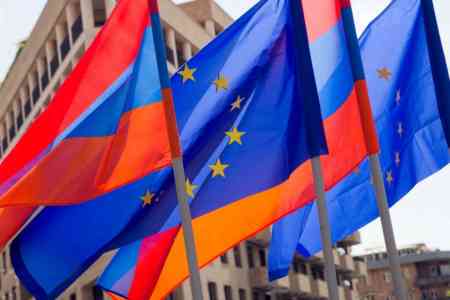 The Armenian Minister of Justice and the EU Ambassador discussed visa liberalization issues for Yerevan.
 Azerbaijan`s aggressive plans against Armenia became possible in wake of Pashinyan`s decisions on Artsakh - expert
 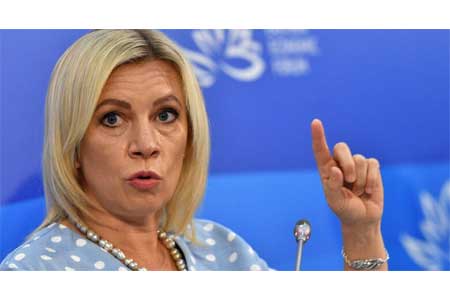 Zakharova: Russia sent a note of protest to Armenia over the act of vandalism at the "Mother Armenia" memorial in Gyumri
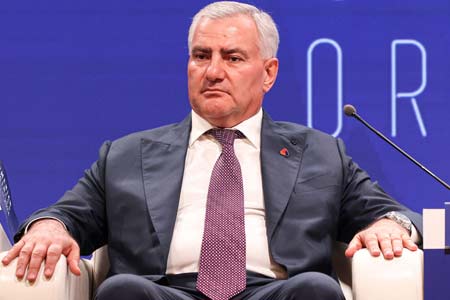 Samvel Karapetyan proposes creating a post-election opposition coalition