



ArmInfo. A new and optimal model aimed at improving the efficiency of the Rescue Service will be implemented in Armenia. This was reported to Prime Minister Nikol Pashinyan by Interior Minister Arpine Sargsyan during the presentation of the ministry's 2025 work report.
According to the government press service, Arpine Sargsyan, in particular, touched upon the ministry's digitalization, the digital products already implemented, and processes currently undergoing digitalization. Work carried out within the framework of visa liberalization between Armenia and the European Union was presented. In this regard, the Prime Minister inquired about the plan for this process and its current stage. "We've developed a plan for ourselves and must ensure its implementation. Moreover, it fully aligns with our strategic priorities. We currently have a document, and if we analyze the actions of our ministries, we'll see that either they've planned it and are already implementing it, or it's been planned and is already in the process of being implemented, or we've already discussed it, identified a solution, and it needs to be implemented," Arpine Sargsyan emphasized.
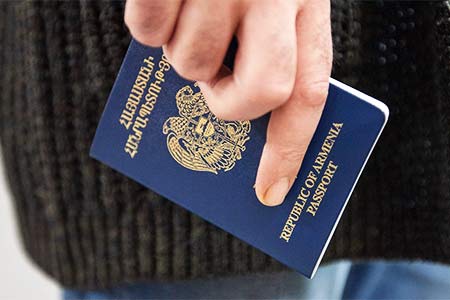
During the presentation of the report, work on implementing the biometric passport and ID card infrastructure was mentioned. Specifically, the implementation of the public- private partnership agreement includes the selection and formation of a geographic network of regional offices for the private partner, as well as issues related to the head office, document design, and security components. In response to a question from the Prime Minister, the Minister noted that 21 of the 22 offices have already been established. "According to our French partners, every effort will be made to ensure that residents using this service have access to the office within a maximum of 30 minutes," the Minister noted.
Particular attention was paid to the Strategic Plan for Migration and Citizenship, which stems from the demographic strategy and the visa action plan. The importance of the citizenship component was emphasized, as well as the need for a comprehensive review of the institution. It was noted that applications for citizenship of the Republic of Armenia are accepted digitally. "As of January 1, everything will be done digitally. All verification processes, including queue management and payment processes, are conducted through the platform," the minister noted. She also noted the transformation of the State Population Register. It was noted that the goal of this step is to create a unified, universal, and accurate database. Various agencies will no longer maintain their own databases, and government agencies will no longer direct citizens to provide any reference or additional data. Citizens will have access to their own data, as well as the ability to manage and submit requests for data changes. Combining this with the electronic border management system will transform it into a very powerful and effective tool for migration management.
Arpine Sargsyan emphasized the citizen-focused approach to public services for driver's licenses and vehicle registration. Specifically, she presented the work and processes involved in digitizing driver's licenses and vehicles, emphasizing that driver's licenses and registration certificates have been digitized, eliminating the need to physically store documents if the license is valid. The car.mia.gov.am platform, which has won the "Innovative Project" award, was presented, thanks to which the number of transactions on digital platforms has reached approximately 600. In response to a question from the Prime Minister, the Minister clarified that everyone can log in to their account and view their digital driver's license. "Registration certificates have also been digitized. For example, if a patrol officer previously fined a driver for not having a paper driver's license card, now no administrative procedures are carried out; the driver's license is verified. We no longer require a paper driver's license," said Arpine Sargsyan, adding that the paper version will only be required outside Armenia; for domestic procedures, the digital version is sufficient.
The operational logic of the 112 Operations Control Center, scheduled to launch in February, was also presented, emphasizing that the new module will integrate the Police Operations Control Center (1-02) and the National Rescue Service Crisis Center (9-11), with the potential to integrate the ambulance service (1-03) in the second phase, in early 2027. The Prime Minister inquired about the operation of the 84-22 call center, to which Minister Sargsyan replied that it was the call center of the Migration and Civil Service. "Employees receive calls through the system, and everything is fully tracked: when we responded, when we left a response," the minister noted.
Next, a program for digitalizing the functionality of the Criminal Procedure Police was presented. Prime Minister Pashinyan expressed interest in the digitalization process. Arpine Sargsyan noted that police officers have a ton of paperwork on their shelves, including names, records, and so on. "We may have complete information about a person, but when a case is being processed in real time, we don't know all the details: whether they're registered as having mental health issues, whether they have alcoholism issues, whether they've been on our radar, whether they have any administrative violations or other offenses? Digitalization solves this problem."
According to the Minister, positive news from the Ministry of Internal Affairs' perspective is the complete readiness of the digitalization process for its most complex platform - the municipal police, which will also be capable of using artificial intelligence. "At the same time, we have a Criminal Police component, so its employees can also work more effectively," said Arpine Sargsyan, adding that the Patrol Police component has been fully digitized.
Particular attention was paid to enhancing the role of the educational component and upcoming programs aimed at expanding the Ministry of Internal Affairs' educational complex, as well as approaches to human resources management.
Participants also touched on hybrid threats and the role of the Ministry of Internal Affairs, emphasizing the role of public communication. In the context of police development, long-term and permanent solutions were discussed, beginning with the legal framework and including at the strategic level. It was noted that the Police Guard, established on November 1st and serving as a guarantor of the effective exercise of citizens' right to peaceful assembly, is for the first time guided by a standardized procedure for the use of force by police officers. The introduction of uniform standards and the development of a corresponding culture were described as a complex but necessary process. Specialized courses for specialized training and periodic retraining of police officers have been developed, with a total of approximately 3,000 officers having completed training. A negotiation group and a regiment for organizing special tactical operations have been formed within the Police Guard; these complementary and highly specialized units are designed to effectively respond to modern challenges in ensuring public safety in crisis and extreme situations.
The Minister presented a number of indicators demonstrating the effectiveness of decisions made regarding the work of both the municipal police and the criminal police and Patrol Service. Specifically, 768 kg of various types of narcotics were seized in 2025, an 80% increase compared to the previous year. 2.5 tons of illegally caught fish were seized, and four groups engaged in large-scale investment fraud were identified. The number of firearms seized, discovered, and voluntarily surrendered increased by 42.2% compared to the previous year. Material damage to the state and society amounted to 25 billion drams, and requests for escorts for arrested and detained persons were satisfied by approximately 98%. The criminal police recorded zero unsolved murders, which Minister Sargsyan emphasized as an important indicator in the context of crime prevention. In 2024, the Patrol Service solved 11,948 crimes, compared to 14,969 in 2025, while the number of driver's license revocations by police was 5,435. Since the introduction of the Patrol Service, the number of victims in traffic accidents has shown a steady downward trend: in 2024, the number decreased by 45 compared to 2023, and by another 50 in 2025. A high efficiency rate is also observed in the area of administrative offenses: in 2025, the Patrol Service recorded approximately 1 million offenses.
Speaking about the decline in road accident fatalities, the Prime Minister noted: "On the one hand, they say so many people have lost their driving licenses, but on the other hand, we are seeing a decline in the number of casualties. These two figures should be presented together," Nikol Pashinyan said.
The Minister of Internal Affairs clarified that an increase in road accident fatalities was recorded in 2023 compared to 2022. However, in 2024, compared to 2023, the number of fatalities decreased by 45, and in 2025, by 50.
According to Arpine Sargsyan, positive changes have also been observed in the work of the police. "We now have foot patrols of police officers patrolling courtyards, various squares, and parks. We have had cases of drug and bladed weapons being discovered. Police officers should not perceive themselves as only maintaining public order during mass gatherings; they are police officers, and they must carry out their assigned duties in any free time. Over the past two months, police officers have identified 146 such cases," the Minister of Internal Affairs concluded.
Border crossing statistics are also noteworthy in numerical terms. Sector representatives explained that, with the exception of 2020 due to the COVID-19 pandemic, 2025 was the first year in which the difference between the entry and exit of RA citizens was positive, reaching a relatively high figure of 8,660. This was presented as a real change in trends, as the overall balance of border crossings was also exceptional, at approximately +30,500, signifying a new migration situation in the Republic of Armenia: Armenia has transformed from a transit country into a point of entry.
























 Politician: With high voter turnout, current government to no chance
 Political analyst: Relatively high turnout indicates that Armenian citizens are actively and consciously shaping the country`s future
 Stanford University professor calls current Armenian parliamentary elections the dirtiest in the country`s history
 Pashinyan`s party leads with 51.13% based on vote counts from 533 polling stations
 Voting in parliamentary elections in Armenia ends
  Strong Armenia: Administrative Court not providing judicial decisions to citizens wishing to vote in parliamentary elections
 Russia trying to convey to Armenia that the EU has effectively transformed into a military-political union – Overchuk
 Armenian FM: Relations between Armenia and Russia need " a certain degree of healing"
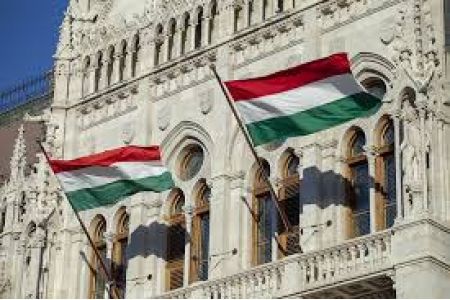 Hungary to stop issuing worker visas to citizens of the Philippines, Georgia, and Armenia